
Los Gatos · Sub-Zero wine column & dual-zone cabinet
Why is my Sub-Zero wine column drifting off set point?
A Glenridge collector called last spring: the set point read 55°F but the bottle thermometer said 61°F, climbing. On a Sub-Zero wine column in Los Gatos, that drift is rarely a dead cabinet — far more often it is a condenser coil packed with dust or pet hair choking airflow, a tired evaporator fan, or a sensor reading wrong. We are a Sub-Zero-focused service: we log the actual zone temperature against the set point, photograph the condenser, and tell you what the fix really is before anyone talks about replacing a built-in column.
Why is my Sub-Zero wine column drifting off set point in Los Gatos?
For a La Rinconada cellar in Los Gatos 95032, Los Gatos Sub-Zero Repair reads dual-zone drift as a clue, not a death sentence: one zone climbing while the other holds usually points to condenser airflow, a tired evaporator fan or a sensor, rarely the sealed loop. We log both set points first. Call (408) 402-4604.
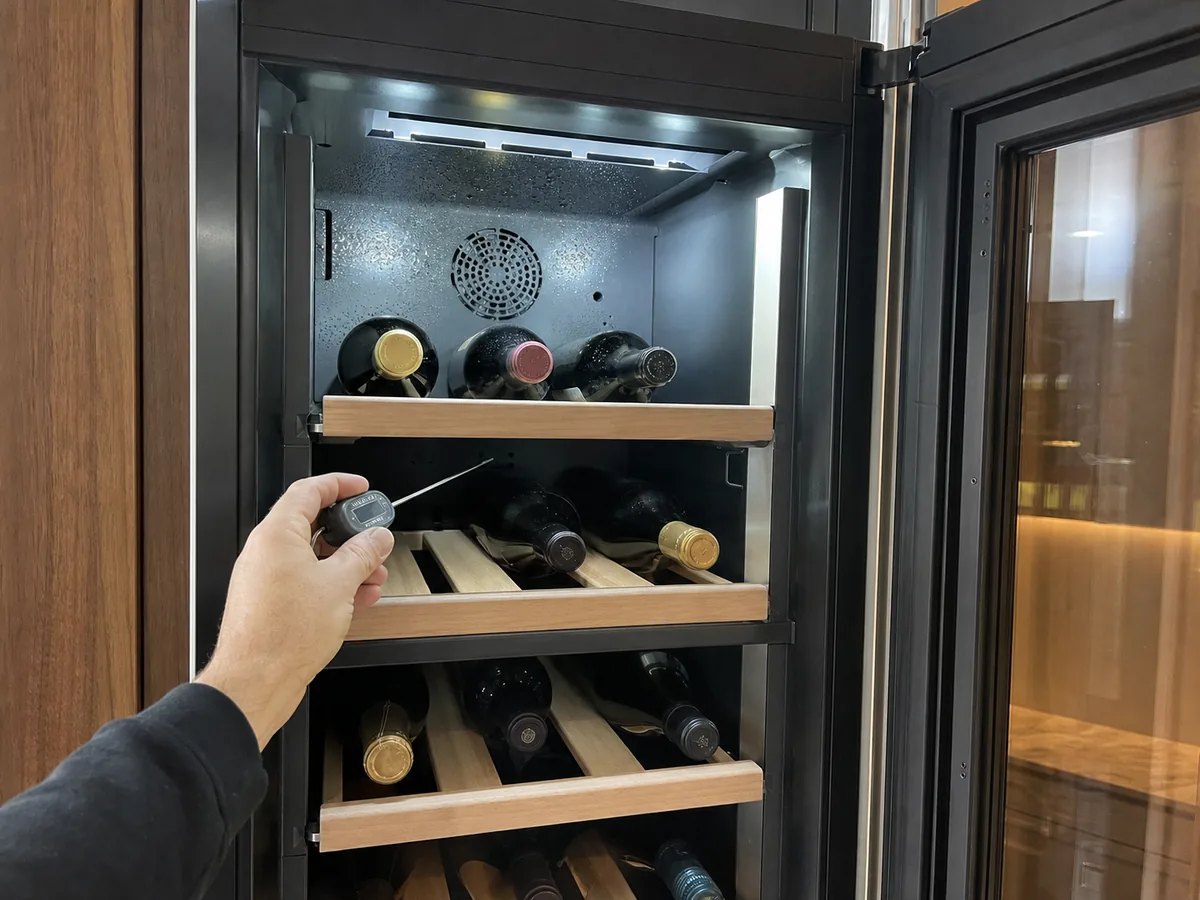
What the drift is telling you
A door gasket leak shows up as a frost line and a sweating door
In plain language: a wine cabinet only holds its band because the door seals tight and the cooling system keeps up. When the gasket compresses, tears, or a hinge sags so the door no longer pulls flush, warm Los Gatos valley air leaks in along the seal. You see it as condensation on the glass or frame, a faint frost line tracing where the cold meets the leak, and a zone that can never quite settle on set point. The cooling system runs longer to fight the in-leak, which on a wine column also dries the cabinet and unsettles the humidity that corks depend on. Diagnosis confirms it the honest way: we read the zone temperature against the set point over time, inspect the gasket cross-section and the frost line for where it breaks contact, and check door close and hinge alignment. If the seal is good and the cabinet still drifts, we move on to airflow, the evaporator fan, and the sensor before anyone suggests a sealed-system fault.
One thing we will not guess: a sealed-system refrigerant loss looks a lot like dirty-condenser drift in the first hour. We do not call it a sealed-system failure — or quote one — until it is confirmed with instruments with qualified recovery planning. A symptom alone is never enough.
Why a wine column is its own animal
A wine cabinet is not generic refrigeration
Treating a Sub-Zero wine column like an ordinary fridge is the fastest way to misread it. A food refrigerator wants to run cold and dry; a wine column wants to hold a warmer, narrower band — typically in the mid-50s — with managed humidity so corks stay supple and labels don't peel. Sub-Zero engineers that on purpose. A dual-zone cabinet runs two independent zones so reds and whites can each sit at their own set point, which means a single shared fault rarely warms both at once. The design also fights the things wine hates: an anti-vibration mounting so the compressor does not agitate sediment, UV-treated glass to keep light off the bottles, and a charcoal/humidity stage that a food box simply doesn't have. The control logic, the damper behavior, and the sensor placement all differ from a fresh-food evaporator.
Los Gatos collector homes layer their own patterns on top. Many columns sit in temperature-controlled cellars, butler's pantries, or great-room millwork next to sun-facing glass, where ambient heat and trapped air make a clean condenser non-negotiable. Older estate kitchens hide deeply built-in units whose serial age decides whether the right OEM sensor or board is still stocked. The fix starts with knowing exactly which cabinet you own — by model and serial — not by guessing from the symptom.
Five things that drift a wine column
Common failures — and what changes the quote
Each card is a real diagnostic path: the symptom, what we confirm, the parts involved, and the one factor that moves the price. We verify before we recommend.
-
1 · Condenser airflow choked
Symptom: whole cabinet slowly warms, runs long and warm to the touch.
Diagnosis: condenser coil packed with dust or pet hair; airflow measured at the grille.
Parts: usually none — a deep coil clean and grille airflow restore.
What changes the quote: if dust was hiding a failing fan, that adds parts.
-
2 · Evaporator fan failing
Symptom: one zone won't reach set point even though the system is running.
Diagnosis: stalled or noisy evaporator fan; airflow over the coil checked.
Parts: OEM evaporator fan motor, serial-matched.
What changes the quote: single vs dual-zone cabinet and access to the fan housing.
-
3 · Thermistor / sensor reading wrong
Symptom: display shows set point but the bottle thermometer disagrees.
Diagnosis: sensor resistance checked against actual probe readings.
Parts: OEM thermistor / temperature sensor for that zone.
What changes the quote: whether one or both zone sensors are off.
-
4 · Control board fault
Symptom: erratic swings, a zone that ignores its set point, or stuck modes.
Diagnosis: control logic and outputs tested after sensors and fan clear.
Parts: OEM control / interface board matched to serial age.
What changes the quote: board availability by serial — stocked vs ordered.
-
5 · Door seal / zone bleed
Symptom: condensation, a frost line, or warm zone air leaking past the gasket.
Diagnosis: gasket cross-section, frost-line trace and hinge alignment checked.
Parts: OEM gasket and/or hinge & alignment service.
What changes the quote: whether the door must be re-shimmed to seal flush.
Your call to make
When to schedule or pause use
Schedule service when the drift is trending the wrong way, when a swing repeats day to day, or when condensation and a frost line appear on the door — those don't fix themselves. Pause use and relocate bottles only if the cabinet is climbing well above set point and won't settle: move irreplaceable bottles to a cool, dark, stable spot until it's diagnosed. If the cabinet is holding within a few degrees, leave it alone and log readings — moving bottles repeatedly exposes them to more swing than the fault does. Use the phone link for urgent problems or Book Online for a scheduled diagnostic window.
Why the neighborhood changes the repair
Los Gatos wine-storage service notes
Each of these is a real service factor — home type, access, or climate — not a keyword list.
- Almond GroveDowntown Victorians and Craftsman bungalows where wine columns tuck into tight pantry millwork — narrow side access means we plan how the cabinet comes out before we arrive.
- GlenridgeHillside great-rooms with integrated columns near sun-facing glass run their condensers hot, so airflow and a coil packed with dust or pet hair are the first checks.
- Glen UnaEstate homes with dedicated cellars and older, deeply built-in Sub-Zero wine cabinets — serial age decides whether the right OEM sensor or board is stocked or ordered.
- BelgatosLarger remodeled kitchens off Blossom Hill where panel-ready wine columns must be reseated true after service so the door gasket seals and the zone holds.
We route the same day through Saratoga, Monte Sereno, Campbell and Cambrian Park in San Jose. Book Online→
When the suspicion is sealed-system
A sealed-system suspicion needs EPA Section 608-regulated verification
Sometimes the cheap suspects clear — the condenser is clean, the fan spins, the sensor checks out — and the cabinet still loses its band. That is when a sealed-system refrigerant loss moves up the list. We do not treat that as a verdict from a symptom. A sealed-system suspicion that needs EPA Section 608-regulated verification is exactly that: confirmed with instruments, under qualified recovery, never a "top-off and hope." The evidence we leave you with is concrete — logged temperature readings of each zone against its set point over time, condenser and evaporator photos showing airflow and frost patterns, model-tag proof that dates the cabinet and matches the part, and OEM fan, gasket, sensor or control-board evidence when one of those is the real cause. That paper trail is what lets you weigh a repair against an $9,500-plus replacement column with real numbers instead of a sales pitch. Compare the math on our sealed-system & compressor page.
What we document on a wine-column request
Evidence, not adjectives
the same three things on every drift request: how the zones are built, what the probe actually reads, and where regulated sealed-system work would be evaluated.
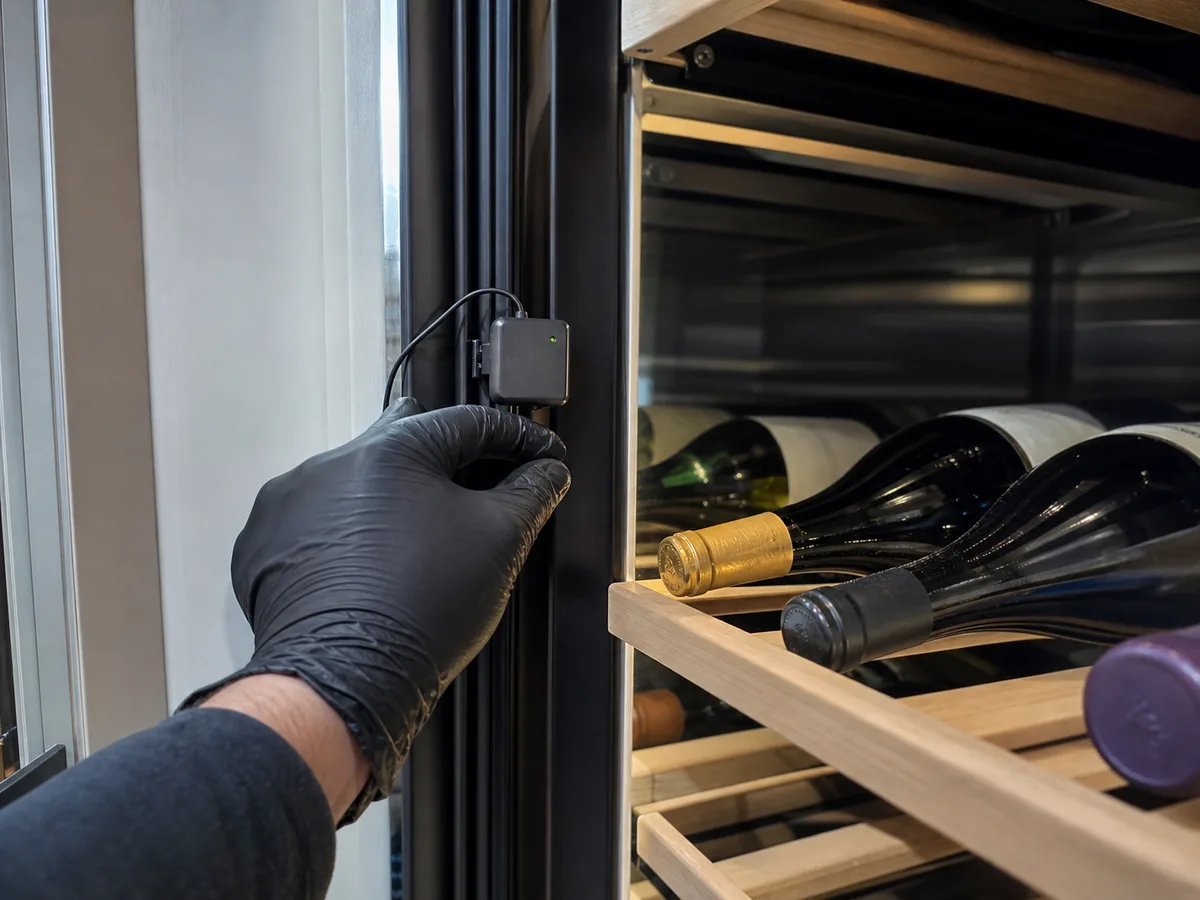
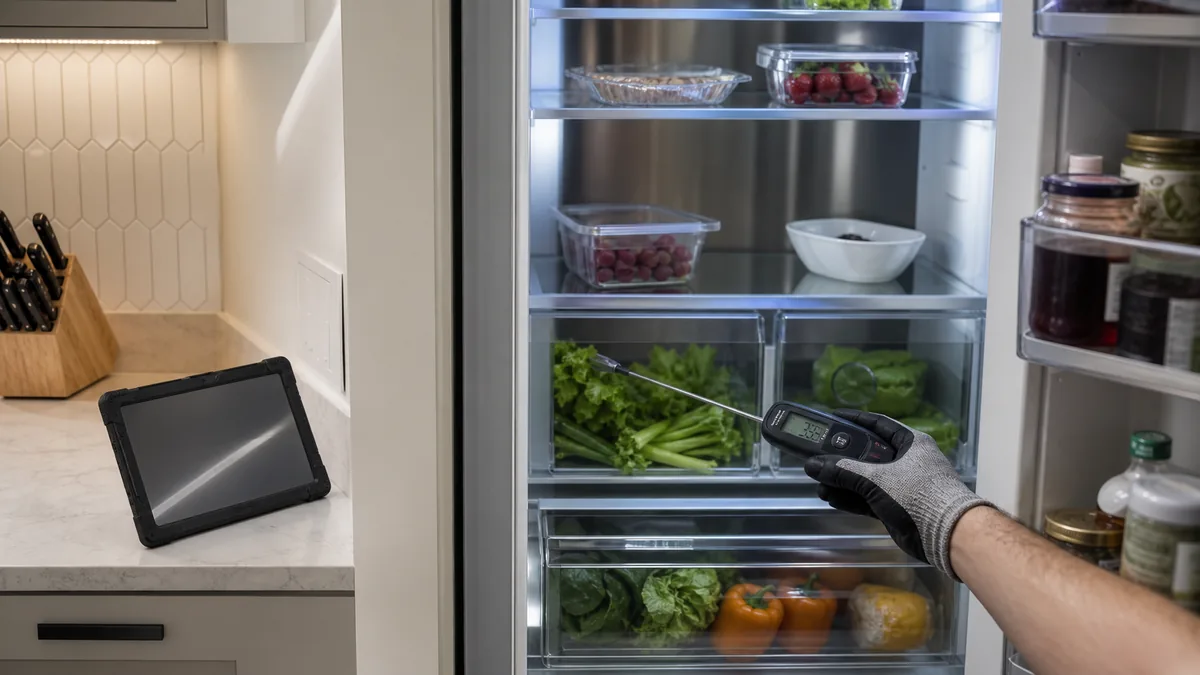
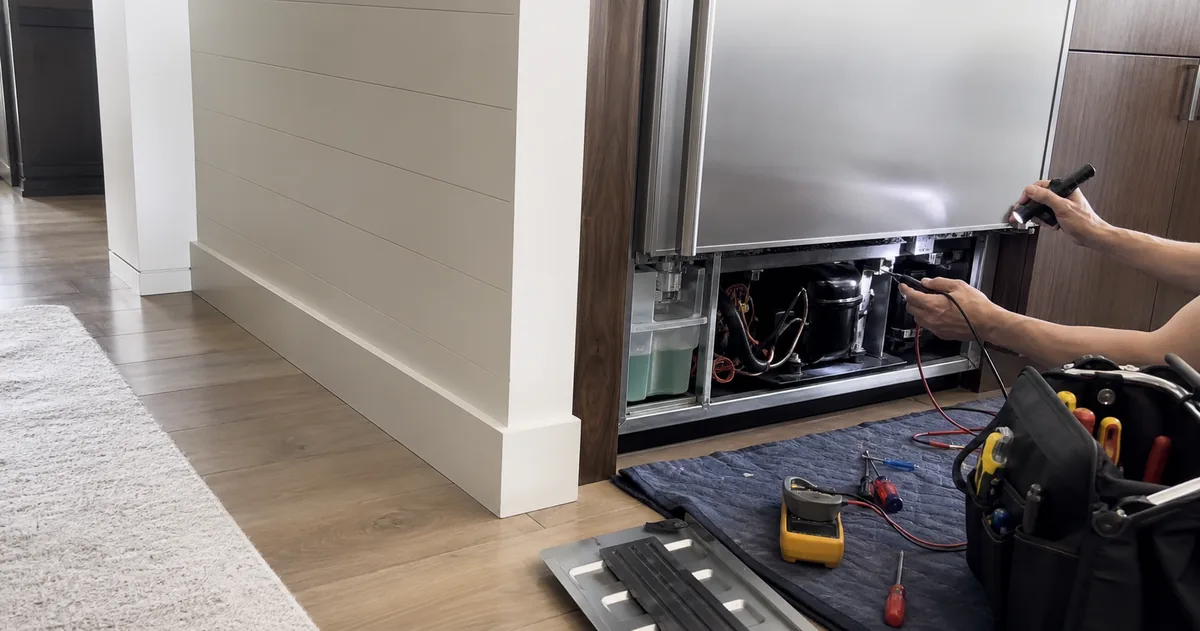
Have the model number and a few readings? That request is faster.
Read the model and serial off the plate, log your set point against an actual bottle thermometer for a few days, and tell us which zone is drifting. We'll tell you whether it's a coil clean, a part, or worth a closer look — before anyone talks about replacing a built-in column.
Real answers
Wine-storage questions we hear in Los Gatos
What temperature should a Sub-Zero wine column hold in Los Gatos?
Most owners set a single zone in the mid-50s °F, or a dual-zone column near 55 °F for reds up top and the mid-40s °F for whites below. Drift of more than about 3 °F over weeks is enough to harm a collection and usually means airflow, the evaporator fan or a sensor - a $340-$695 repair.
Why is my Sub-Zero wine cooler drifting warm but not failing outright?
Gradual drift rather than total failure points to condenser airflow choked by dry-summer dust, a tired evaporator fan, or a sensor reading slightly off - not a dead sealed system. We log actual zone temperatures against the set point over the visit before recommending parts. Most wine-zone repairs in Los Gatos run $340-$695.
How many degrees of wine column drift actually matters?
A steady set point matters more than the exact number. A few degrees of slow drift over weeks, or a swing of several degrees between day and night, is enough to age a collection faster than it should. Brief warm-ups from loading bottles or opening the door are normal. We log the zone temperature against the set point over time so we can tell a real fault from routine variation before recommending any part.
Should I move my bottles out of a drifting Sub-Zero wine column?
If the cabinet is warming well above set point and trending the wrong way, relocate irreplaceable bottles to a cool, dark, stable spot until it is diagnosed. If it is holding within a few degrees, leave it as is and log readings — moving bottles repeatedly exposes them to more swing than the fault does. We can usually tell you which from your readings and model details from your readings and model number.
Is a Sub-Zero wine column repaired the same way as a regular refrigerator?
No. A wine column or dual-zone cabinet runs warmer, holds a tighter band, manages humidity and uses UV-treated glass and anti-vibration design. The control logic, sensors and damper behavior differ from a food refrigerator, so a generic fridge approach often misreads it. We diagnose it as the specialized appliance it is, by model and serial.
Can you confirm the drift before charging me for parts?
Yes. We record actual zone temperatures against the set points, photograph the condenser and evaporator, and verify the model tag before recommending anything. If a sealed-system loss is suspected, that is confirmed with instruments with qualified recovery planning, never assumed from a symptom.
More on related faults: full Sub-Zero service · sealed system & compressor · Book Online.
How we diagnose drift
How we diagnose a drifting Sub-Zero wine column in Los Gatos
- Log the set point. Record the target temperature for each zone before touching anything.
- Track actual drift. Log real zone temperatures over the visit to confirm the drift, not guess it.
- Check condenser airflow. Dry-summer dust on the coil is the top cause of slow warm drift in Los Gatos cellars.
- Test fan and sensor. Meter the evaporator fan and zone sensor against the set point.
- Verify the fix. Confirm both zones hold their set points; most wine-zone repairs are $340-$695.
Cost of a wine-zone repair
Sub-Zero wine column repair cost in Los Gatos
Typical Los Gatos ranges for wine-storage temperature work, confirmed in writing after diagnosis. The diagnostic is credited to any repair you approve.
| Service / symptom | What’s included | Price range | Typical time |
|---|---|---|---|
| Diagnostic visit (credited) | Zone temperatures logged vs set point | $135-$210 | 45-90 min |
| Condenser airflow / coil clean | Coil cleaned, condenser fan checked | $165-$320 | 1-2 hrs |
| Wine-zone evaporator fan / sensor | OEM fan or sensor, set point verified | $340-$695 | 1-3 hrs |
| Control / interface board | Service-mode evidence, OEM board | $545-$1,045 | 1-4 hrs |
| Sealed-system (wine column) | Pressure proof, EPA-608 recovery | $945-$2,650 | 2-6 hrs + parts |
Fast fact: Sub-Zero wine columns hold a set point in the mid-50s °F; drift of more than ~3 °F over weeks usually means condenser airflow, the evaporator fan or a sensor. Typical Los Gatos wine-zone repair: $340-$695.
Customer reviews
What Los Gatos homeowners value after a Sub-Zero visit
Backed by our wider appliance repair network with 700+ customer reviews across platforms and a 4.9 average rating.
Recent Sub-Zero work across Los Gatos and the West Valley.
Our 427R wine column drifted to 58 °F up top against a 55 °F set point. The tech in La Rinconada (95032) logged both zones, traced a tired evaporator fan, replaced it and recalibrated the sensor. Back to 55 °F for $430.
Reds were warming in our Glen Una cellar cabinet (424). They found condenser airflow choked by dry-summer dust, cleaned the coil and checked the fan. Drift gone for $295, no parts beyond service.
Lower zone of our dual-zone wine unit wouldn’t hold in a Belgatos great-room. They confirmed the drift over the visit, replaced a failed zone sensor and verified both set points. $385, one visit.