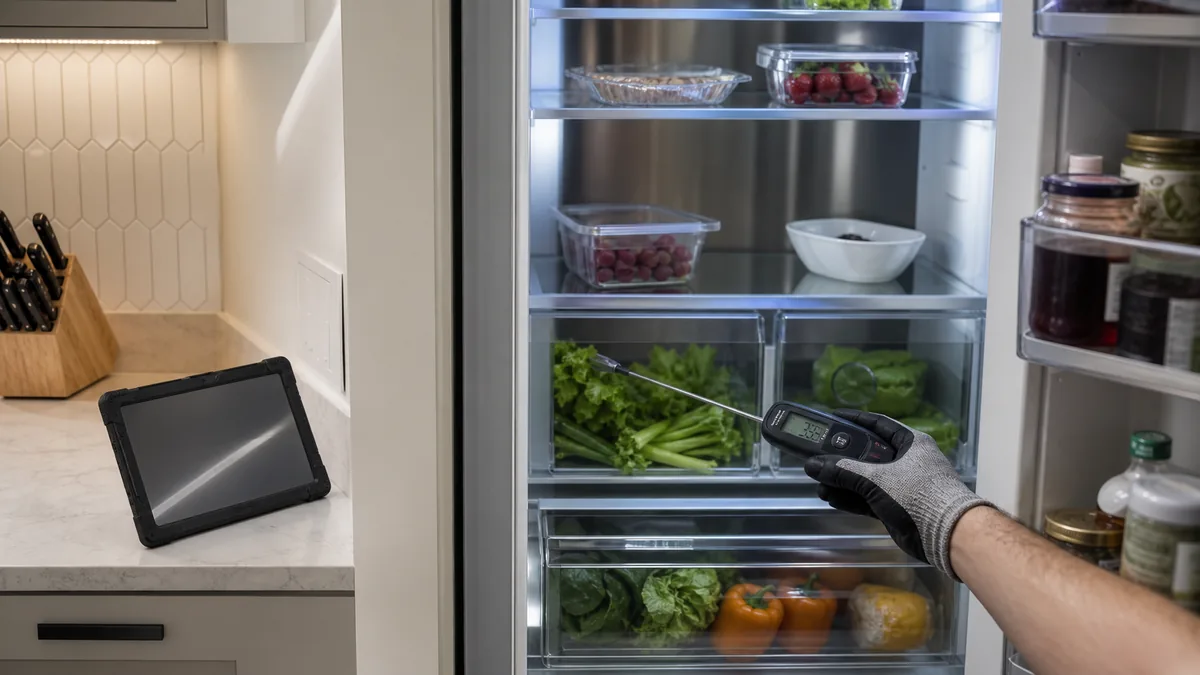
| Over-temperature alert, one zone | Evaporator fan, frosted coil, thermistor, or damper | Probe both zones vs set point; inspect coil behind rear panel | Overpacked shelves blocking vents reads as a fault | Clear airflow, then replace the confirmed part |
| Both zones warming, compressor runs long | Sealed-system loss or metering restriction (suspected) | EPA Section 608-regulated pressure & temperature readings on instruments | Dirty condenser mimics this — check airflow first | Clean condenser; if confirmed, sealed-system repair under recovery |
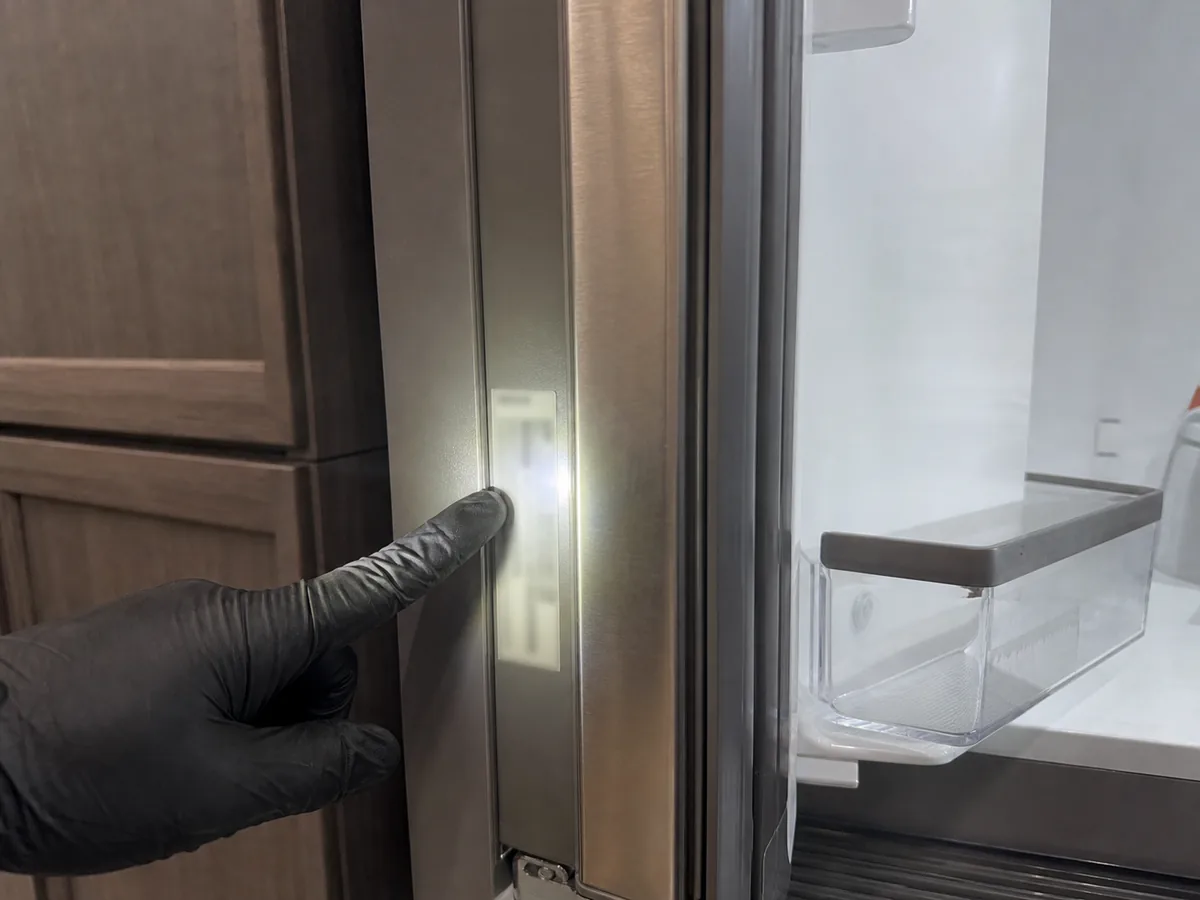
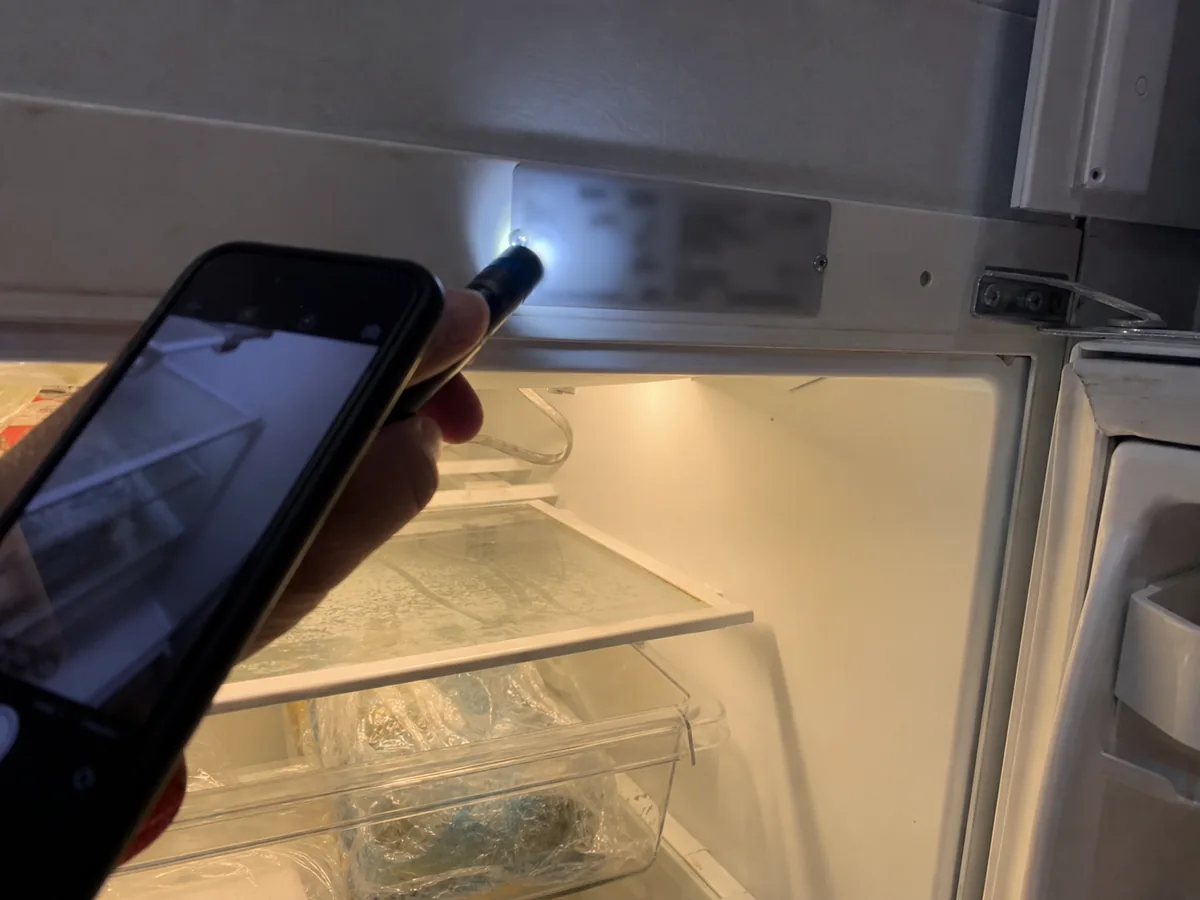
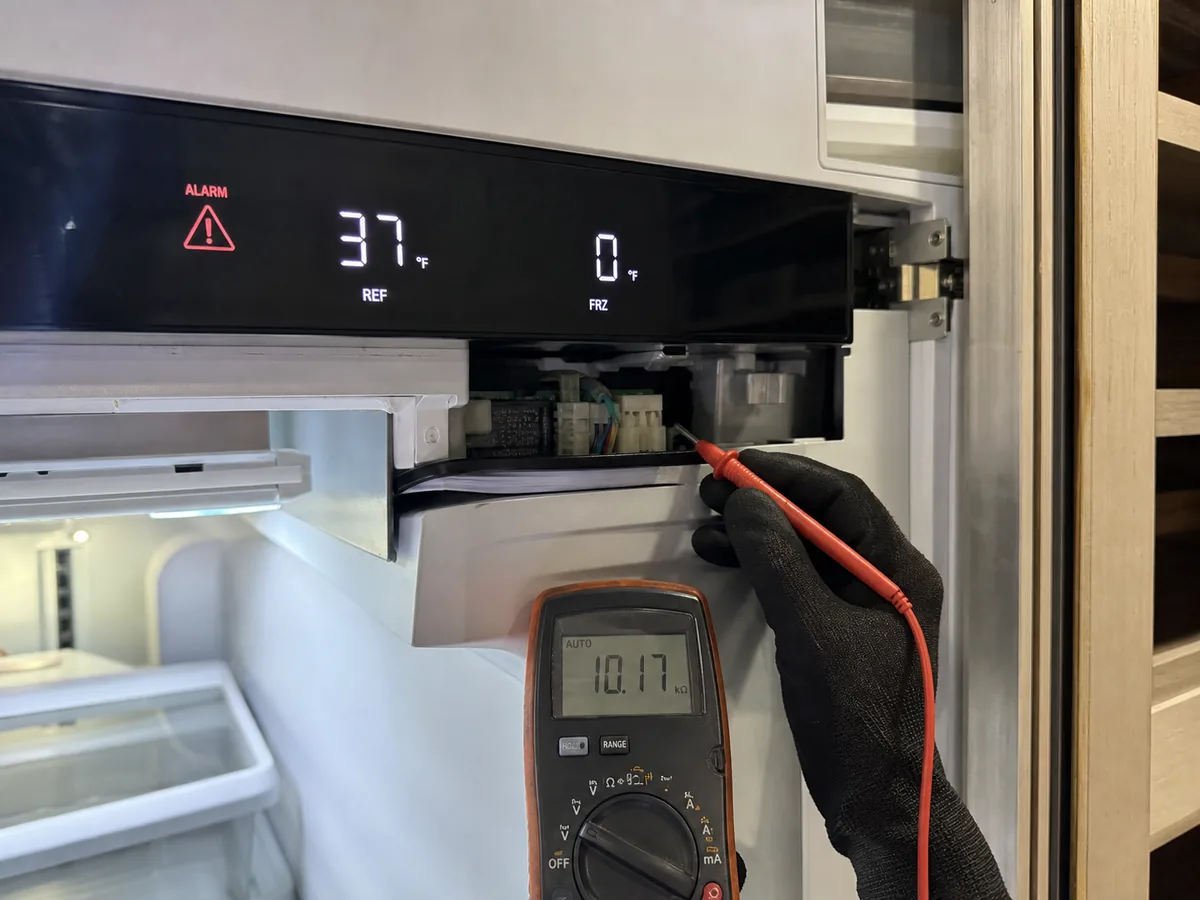
| Door / ajar alarm with door clearly shut | Door switch, hinge sag, or gasket leak | Continuity test the switch; read the frost line on the seal | A settled built-in cabinet holds the door open a hair | Reset hinge/level, replace switch or gasket as confirmed |
| Condensation / frost line, no code | Door gasket leak | Paper-drag test; map where warm valley air enters | Humid open-door habits read as a "leak" that isn't | Gasket replacement and door reseat to seal true |
| Defrost-related alert or heavy frost | Defrost heater, thermostat, sensor, or control timing | Verify a defrost cycle; check heater and sensor on a meter | One-off frost after long door-open isn't a failure | Replace the failed defrost component, re-verify cycle |
| Ice / water-related alarm | Inlet valve, fill tube freeze, or module | Measure fill volume and cycle the maker on site | A half-open household shutoff looks like a dead maker | Open supply / replace valve or module as measured |
| Intermittent beep, no clear pattern | Sensor circuit, loose harness, or board | Read stored fault history; inspect harness and board | Repeated resets erase the very history needed | Repair connection or board only after the fault is captured |
| Display dim, garbled, or unresponsive | Interface board, power supply, or harness | Confirm supply voltage; isolate interface from main control | A brownout or surge can be a one-time event, not a failure | Replace the confirmed board; verify normal display after |