
Los Gatos · Sub-Zero not cooling · ZIP 95030
Your Sub-Zero is warm — read this before you decide it's dead
A homeowner off Los Gatos Boulevard in ZIP 95030 asked us last week, "My Sub-Zero fresh food is in the 50s but the freezer is rock solid — do I need a whole new fridge?" Almost never. Dual refrigeration gives each zone its own evaporator, so one side can warm while the other holds. The honest first question is which zone is warm, because that splits a $300 fan job from sealed-system work. We diagnose in place when we can and only weigh the built-in cabinet removal and reseat risk when a repair truly demands rear access.
Why is my Sub-Zero not cooling in Los Gatos?
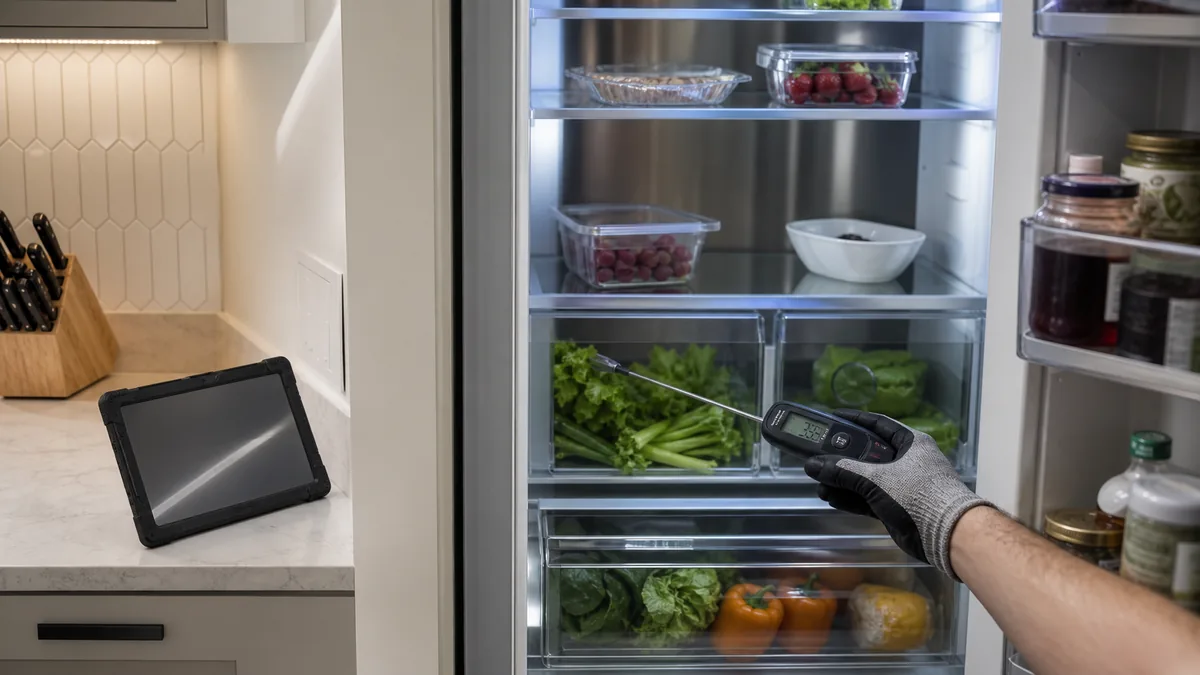
In an Almond Grove kitchen in Los Gatos 95032, Los Gatos Sub-Zero Repair triages a warm built-in by zone: a warm fresh-food side with a frozen freezer points to that evaporator fan, while both zones drifting warm usually means a dust-packed condenser choking airflow, not the compressor. We probe both temps first. Phone (408) 402-4604.
What's actually happening
When the condenser coil is packed with dust or pet hair
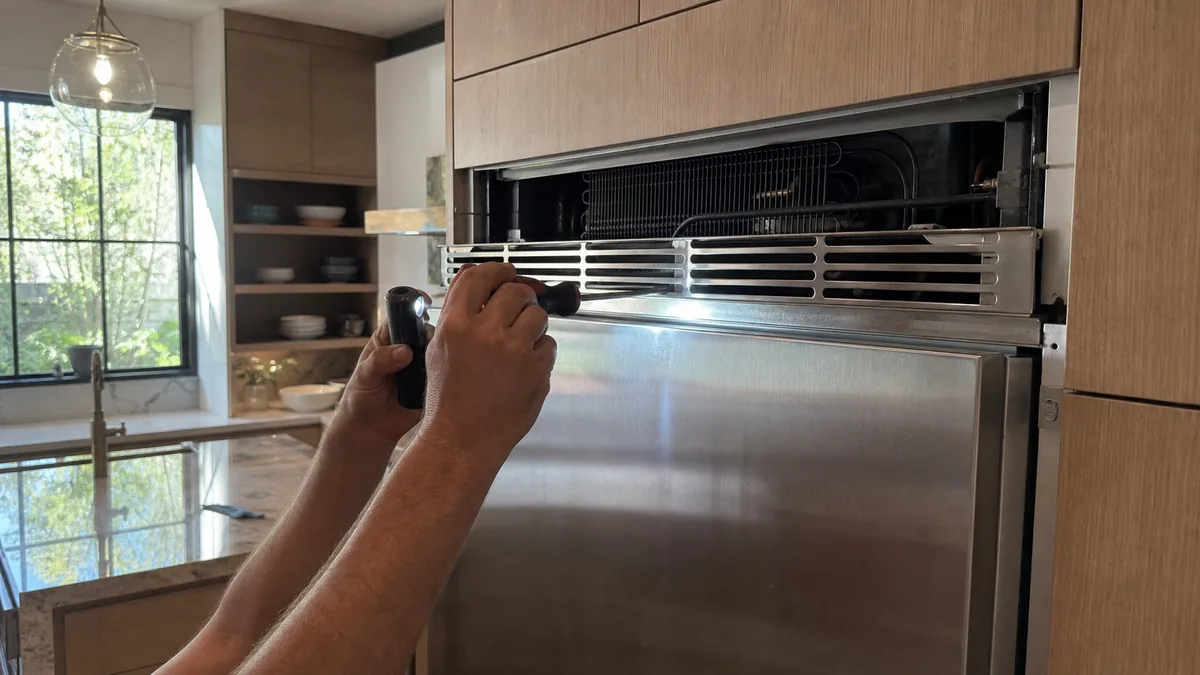
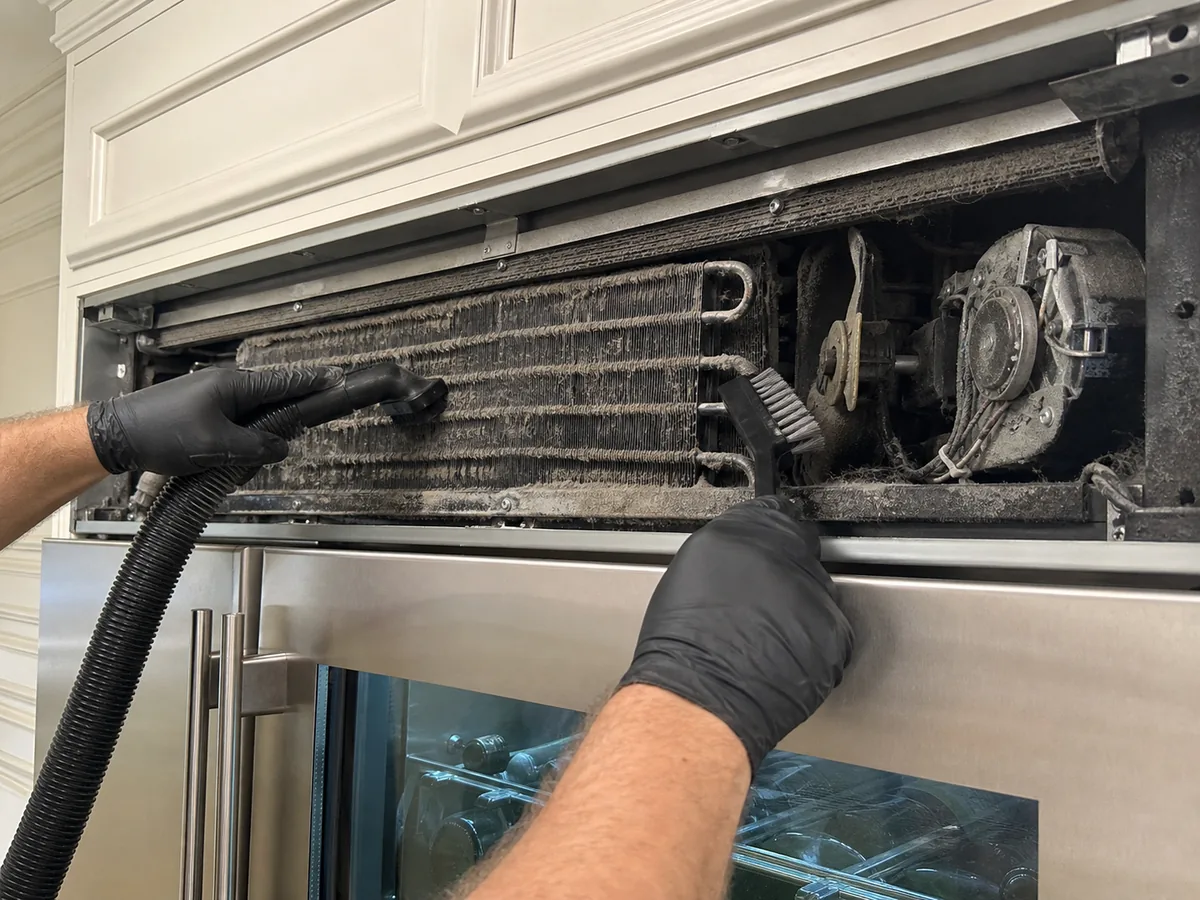
The condenser is the radiator behind your Sub-Zero's upper grille. Its job is to dump the heat the refrigerant just absorbed inside the cabinet. When that coil is packed with dust or pet hair — and in our valley homes with dogs, cats and dry foothill air, it gets packed fast — it can't shed heat. The compressor keeps running but the refrigerant comes back too warm, so cooling capacity slowly bleeds off. You feel it as a unit that runs almost constantly, feels hot at the grille, and drifts warm in both zones rather than one.
Diagnosis confirms it the boring, reliable way: we read both compartment temperatures against their set points, then pull the grille and inspect the condenser directly. A coil matted gray with lint, paired with long run times and a hot grille, is a clear airflow diagnosis — cheap to fix, and a relief compared with what people fear. We brush and vacuum the coil, verify airflow, and re-probe to confirm the zones recover.
How you notice it
Normal Sub-Zero behavior vs a real not-cooling problem
A working Sub-Zero is not silent or motionless. It cycles, you hear the evaporator fan, and after you load groceries or open the door on a warm day it recovers within an hour or two. Light frost on the rear interior panel and a brief whoosh of air are normal. None of that is a fault.
What is abnormal: butter and milk that stay soft, condensation forming inside, the fresh-food zone reading in the 45–55°F range, ice cream going soft in the freezer, or the unit running non-stop without ever pulling temperature back down. A single warm zone while the other holds is the classic dual-refrigeration signature — worth a call, not a panic. Both zones warming together is more urgent.
Stop using the appliance when: the fresh-food compartment sits above 40°F for more than two hours, when you smell burning or hot electrical odor, or when water is pooling on the floor at the base. Move perishables to a cooler, leave the unit in its failed state for the technician, and don't keep cycling power. Above 40°F your food is no longer in the safe zone, and repeated resets can erase the fault history we need to read.
Core diagnosis · simple to expensive
Ranked causes — and how the warm zone tells us where to look
Triage starts with one question: is the fresh-food side warm, the freezer side warm, or both? That split, paired with the signs and tests below, takes you from the cheapest fix to the costly exception.
Fresh-food side warm, freezer still cold
| Likely cause | Signs | Test | Typical repair |
|---|---|---|---|
| Evaporator fan stalled | Fresh food drifting to high 40s–50s, freezer fine, no airflow felt at the fresh-food vents | Pull rear panel, spin/power the fan, confirm no air movement | OEM evaporator fan motor |
| Frosted evaporator / defrost or damper fault | Slow warm-up, visible ice block on the rear coil, air-damper not opening | Inspect coil for frost, check defrost heater and damper operation | Defrost component or damper, then clear coil |
| Fresh-food thermistor / sensor | Compartment reads wrong vs an independent thermometer; cooling cycles oddly | Compare probe reading to the unit's sensor value | Replace zone thermistor |
Freezer side warm, fresh food still cold
| Likely cause | Signs | Test | Typical repair |
|---|---|---|---|
| Defrost system fault | Freezer climbing, heavy frost behind the freezer panel, soft ice cream | Test defrost heater, sensor and timer/control output | Defrost heater or sensor |
| Freezer evaporator fan | No air in freezer, frost localized, fan silent | Power the fan, confirm rotation and airflow | OEM freezer fan motor |
| Freezer thermistor / control input | Set point ignored, erratic cycling | Compare sensor value to probe; check control logic | Sensor or control repair |
Freezer warm, fridge still cold? That is its own cold-side fault — if it's the freezer that's warm, start here for the defrost, evaporator-fan and airflow breakdown specific to a Sub-Zero freezer.
Both zones warm together
| Likely cause | Signs | Test | Typical repair |
|---|---|---|---|
| Condenser airflow blocked | Coil packed with dust or pet hair, hot grille, unit runs non-stop, both zones drift | Pull grille, inspect condenser, check run time and grille temperature | Clean coil, verify airflow |
| Control / interface board | Display glitches, neither zone holds set point, intermittent behavior | Check board outputs and inputs against the model's logic | OEM control board |
| Sealed system / compressor (the expensive exception) | Both zones slowly warming over days, compressor running but not cooling, after airflow is ruled out | Instrument the sealed loop; pressures and temperatures under EPA Section 608-regulated procedure | Sealed-system repair / compressor |
Order matters: we exhaust airflow, fans, defrost, thermistors and control before we ever instrument the sealed system. The compressor is the last suspect, never the first — see the full breakdown on our sealed system & compressor page. And if the sealed-loop vocabulary in that last row is unfamiliar — recovery, certification classes, Section 608 — start with what the refrigerant rules actually say, term by term.
Why the local picture changes the repair
Not-cooling in Los Gatos and ZIP 95032 kitchens
Geography genuinely changes this diagnosis. In ZIP 95032 — the Belgatos and Blossom Hill side — many Sub-Zeros sit in 1990s-and-newer remodels where the column is deeply built into millwork with panel-ready fronts, so the upper grille pulls warm air from a tight cabinet soffit. That cabinetry, plus our dry foothill summers, lets the condenser load up with dust and pet hair faster than in an open kitchen, which is why airflow leads our both-warm triage here. Older Almond Grove and Glen Una homes add a different wrinkle: serial age decides whether the right OEM fan or board is still stocked or has to be ordered, and tight side access changes whether the unit can come out at all. We also route into the hills of ZIP 95033 above Los Gatos, where long condenser run times in hot-afternoon kitchens and rear refrigerant-line routing behind finished cabinetry both factor into how — and whether — we pull a built-in to reach the fault. If food is already warming while you read this, switch to the same-day triage decision guide first.
Evidence, not adjectives
A door gasket leak, condensation or frost line is read, not guessed
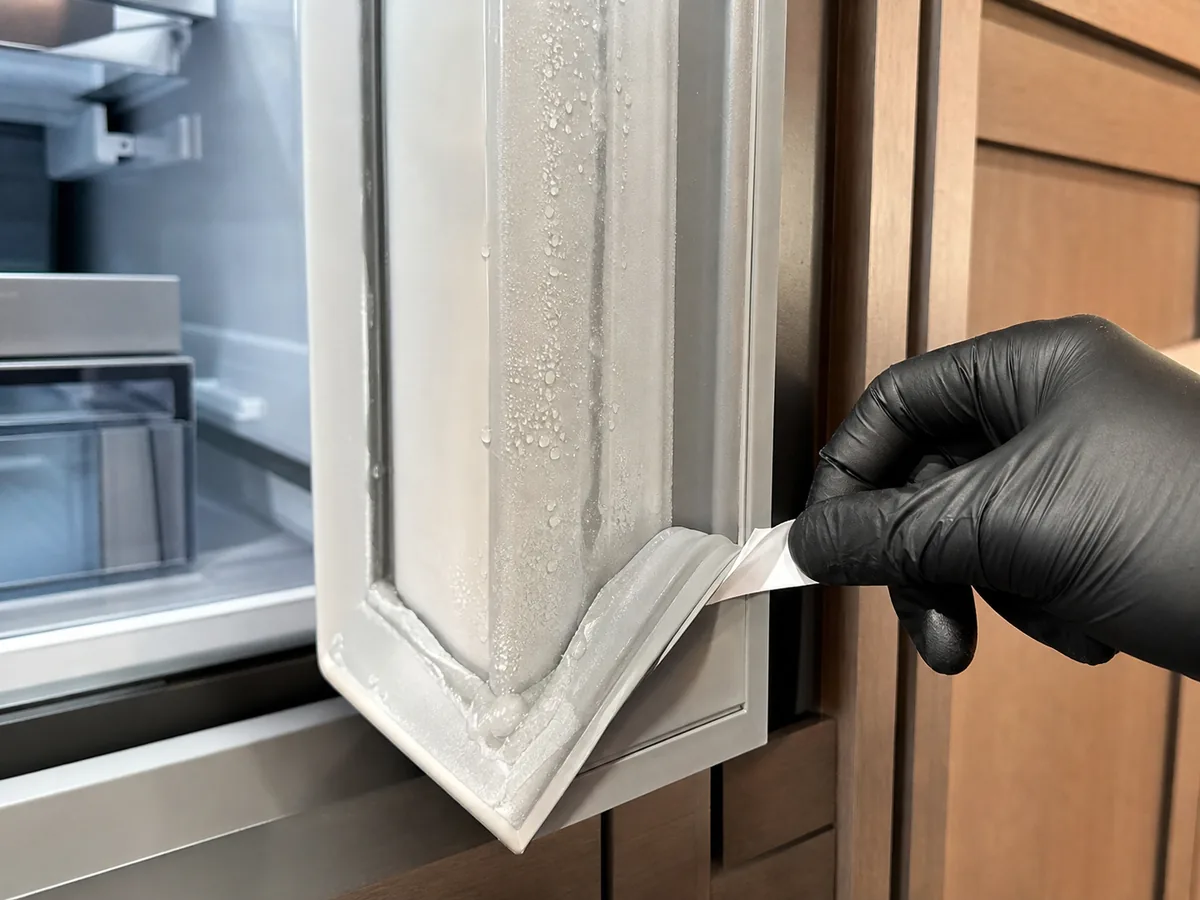
Not every warm Sub-Zero is a mechanical failure — sometimes warm valley air is leaking past a tired seal. When we suspect that, a door gasket leak, condensation or frost line is treated as physical evidence: the frost line on the cabinet or gasket shows exactly where warm air is entering, and condensation pattern tells us whether the seal or a sagging panel-ready door is the culprit. Every not-cooling visit leaves a record you can see — temperature readings against set points, condenser and evaporator photos, model-tag proof to match the right part, and OEM fan, gasket or control-board evidence held against the meter before we quote. No badge, just what the instruments and the unit show.
Know which zone is warm? That call is faster and cheaper.
Tell us whether the fresh-food side, the freezer, or both are warm, read the model and serial off the plate, and we arrive with the parts your Sub-Zero actually takes — no truck-stock fishing.
Not-cooling questions
Sub-Zero not-cooling questions we hear in Los Gatos
What temperature should a Sub-Zero hold, and when is it too warm?
A built-in Sub-Zero holds about 37 °F in the fresh-food zone and 0 °F in the freezer. A fresh-food reading above ~42 °F, or food softening, means it is too warm and should be triaged. If the freezer is still frozen, the fault is usually a single zone, which keeps the repair in the $365-$695 range.
Why is one Sub-Zero zone warm while the other stays cold?
Dual refrigeration gives each compartment its own sealed system, so one side can drift while the other holds. A warm fresh-food side with a frozen freezer points to that zone's evaporator fan, a frosted coil or the air damper - not the shared compressor. The typical Los Gatos repair is $365-$695.
My fresh-food side is warm but the freezer is still cold — is the whole fridge dying?
Usually not. On a dual-refrigeration Sub-Zero each compartment has its own evaporator, so one zone can warm while the other holds. A warm fresh-food side with a cold freezer most often points to the fresh-food evaporator fan, a frosted coil from a defrost or damper fault, or that zone's thermistor — not the compressor. We confirm with probe readings and a look behind the rear panel before quoting anything.
How warm does a Sub-Zero have to get before I should throw food out?
The food-safety line is 40°F. If the fresh-food compartment has been above 40°F for more than two hours, treat perishables as unsafe. A healthy Sub-Zero fresh-food zone holds near 38°F and the freezer near 0°F. If both zones are warming together, move what you can to a cooler and stop relying on the unit until it is diagnosed.
Can a dirty condenser coil really stop a Sub-Zero from cooling?
Yes. The condenser behind the upper grille sheds heat, and when it is packed with dust or pet hair it cannot, so the unit runs long, runs hot and slowly loses cooling capacity — often in both zones. It is the cheapest and most common cause we find, which is why airflow is checked before anyone suspects the compressor or sealed system.
Do you have to pull the Sub-Zero out of the cabinet to diagnose not-cooling?
Most diagnoses happen in place: we read both zones, pull the interior rear evaporator panel, and inspect the grille and condenser without removing the cabinet. We only pull a built-in when the repair requires rear or sealed-system access, and then we protect the floor and panel-ready front and reseat the unit true so the door closes flush and the gasket seals.
How a visit runs
How we diagnose a warm Sub-Zero in Los Gatos
- Confirm the zone. Probe both compartments — fresh-food vs freezer — to see if it is a one-zone dual-refrigeration split or both warming.
- Check airflow first. Inspect the condenser coil behind the top grille; dry Los Gatos summers pack it with dust and pet hair, the cheapest cause of a warm cabinet.
- Pull the rear evaporator panel. Look for a frosted coil or a stalled fresh-food evaporator fan in the warm zone.
- Test damper and defrost. Cycle the air damper and verify the defrost heater and sensor before naming a part.
- Meter the sensors. Compare each thermistor reading to the probe to catch a zone sensor reading wrong.
- Quote only after proof. Sealed-system loss is confirmed with pressure evidence, never assumed; most repairs land at $365-$695.
Cost of a not-cooling repair
Sub-Zero not-cooling repair cost in Los Gatos
These are typical Los Gatos planning ranges for a warm Sub-Zero, confirmed in writing after on-site diagnosis. The diagnostic is credited to any repair you approve.
| Service / symptom | What’s included | Price range | Typical time |
|---|---|---|---|
| Diagnostic visit (credited to repair) | Both-zone probe readings, rear-panel frost check | $135-$210 | 45-90 min |
| Evaporator fan motor (one zone) | OEM fan, defrost verified, zone re-probed | $365-$695 | 1-3 hrs |
| Air damper / defrost service | Damper cycled, defrost heater/sensor, frost cleared | $295-$590 | 1-3 hrs |
| Thermistor / zone sensor | Sensor tested vs probe, OEM thermistor fitted | $215-$430 | 1-2 hrs |
| Condenser fan + coil airflow | Coil cleaned, condenser fan, run-time check | $365-$695 | 1-2 hrs |
| Sealed-system / compressor (built-in) | Pressure proof, EPA-608 recovery, repair | $945-$2,650 | 2-6 hrs + parts |
Fast fact: A typical one-zone warm-fresh-food repair in Los Gatos runs $365-$695. A built-in Sub-Zero holds about 37 °F fresh / 0 °F freezer; a fresh-food reading above ~42 °F with a still-frozen freezer points to that zone’s evaporator fan or damper, not the compressor.
Customer reviews
What Los Gatos homeowners value after a Sub-Zero visit
Backed by our wider appliance repair network with 700+ customer reviews across platforms and a 4.9 average rating.
Recent Sub-Zero work across Los Gatos and the West Valley.
Our Sub-Zero 648PRO upper zone climbed to 49 °F while the freezer held 0 °F. The tech reached Glenridge (95032) within four hours, found a stalled fresh-food evaporator fan, fitted the OEM motor and verified 38 °F before leaving. $415, same day.
Fresh-food side of our BI-36U warmed in an Almond Grove Craftsman. They probed both zones, traced a sticking air damper and frosted coil, cleared the defrost and cycled the damper. Back in spec in about two hours for $360.
Both compartments of our 642 were slowly warming in our Belgatos remodel. Instead of quoting a compressor they read pressures, found a failed condenser fan and dust-packed coil, and restored airflow for $470 — no sealed-system bill.