
Los Gatos · Sub-Zero door gaskets & cabinet seals
Why is my Sub-Zero door sweating, frosting or leaking cold air?
If a built-in Sub-Zero near Vasona Lake County Park shows condensation on the door, a frost line along the gasket, or a wine column drifting several degrees, the seal — not the compressor — is usually the culprit. Warm, humid Los Gatos air is leaking past a compressed or torn gasket, or a heavy panel-ready door has dropped on its hinge and broken contact. We are a Sub-Zero-focused repair service: we run the seal test, read the frost pattern, and confirm whether the fix is the gasket, the hinge, or reseating the cabinet before quoting.
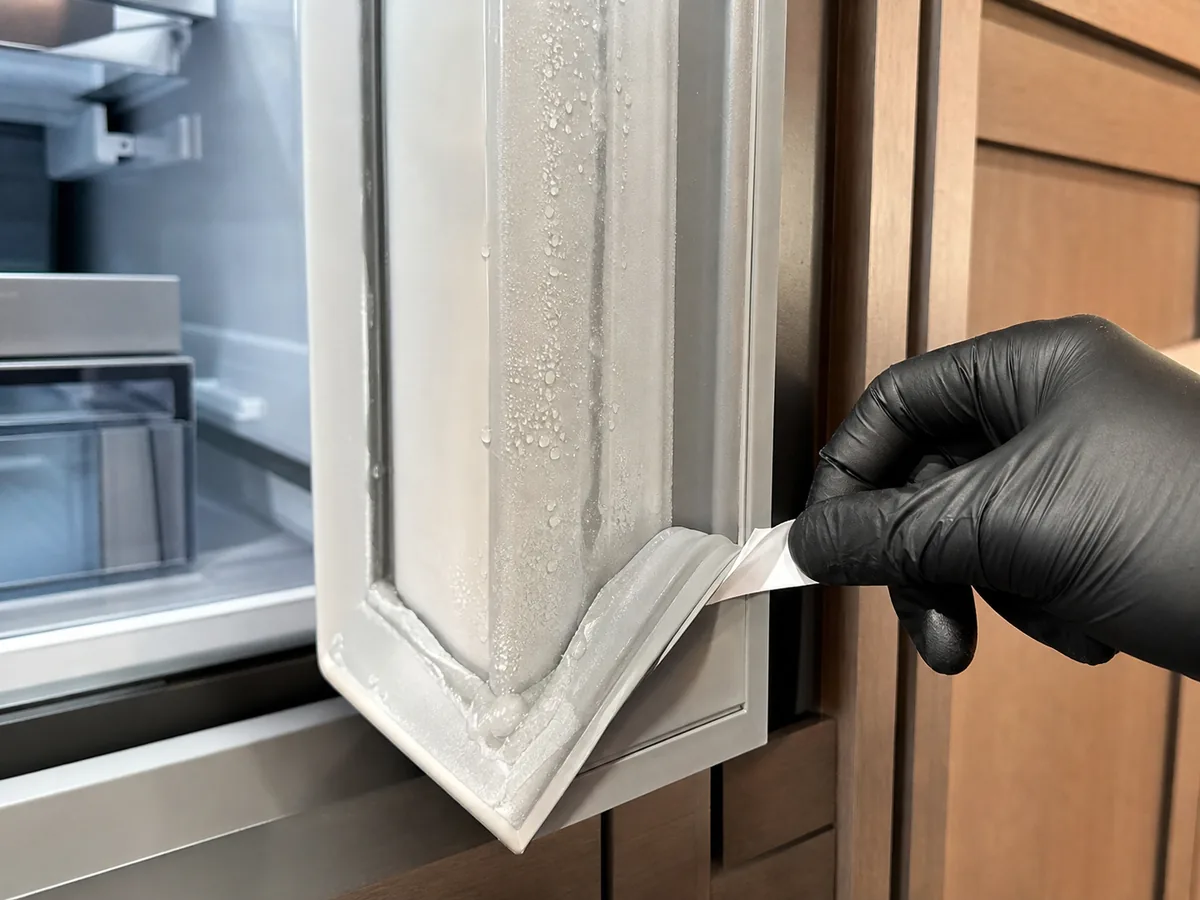
Diagnostic matrix · read this first
Ranked likely causes, simple to expensive
Seal symptoms have a predictable order of suspects. We work it cheapest-first so you are never paying to replace a gasket when the real fault is a sagging hinge or a unit that has shifted in its opening.
| Likely cause | Signs | Test | Typical repair |
|---|---|---|---|
| Dirty / sticky gasket | Door tugs on opening; sticky residue; uneven seal but rubber still supple. | Wipe the lip clean, then the dollar-bill drag test around the frame. | Clean and condition the gasket; re-test the seal. Often no part needed. |
| Compressed / torn gasket | Visible frost line, flattened spots, a nick or split in the rubber, steady sweat. | Bill pulls free easily at the flattened section; inspect the lip under light. | OEM gasket replacement, then verify seal contact all the way around. |
| Hinge sag (heavy panel door) | Frost or warm-air leak concentrated at the top hinge corner; door sits low. | Check gap top-to-bottom; bill grips at the bottom but slides free up top. | Adjust or replace the hinge cartridge; re-level the panel-ready front. |
| Door not closing flush | Door drifts back open; one edge stands proud; gasket touches on only one side. | Watch the swing path; confirm latch and self-close action; bill test each edge. | Re-align the door, square the panel, correct the closer so it seats flush. |
| Cabinet reseat (unit shifted) | Whole unit out of square in the opening; multiple corners leak at once. | Measure the cabinet opening against the unit; check leveling feet and shims. | Pull, re-shim and re-level the built-in true; re-seat so all four edges seal. |
This table is the working order we follow on site. Most Los Gatos calls resolve in the top three rows; the bottom two are the expensive exceptions we confirm before recommending.
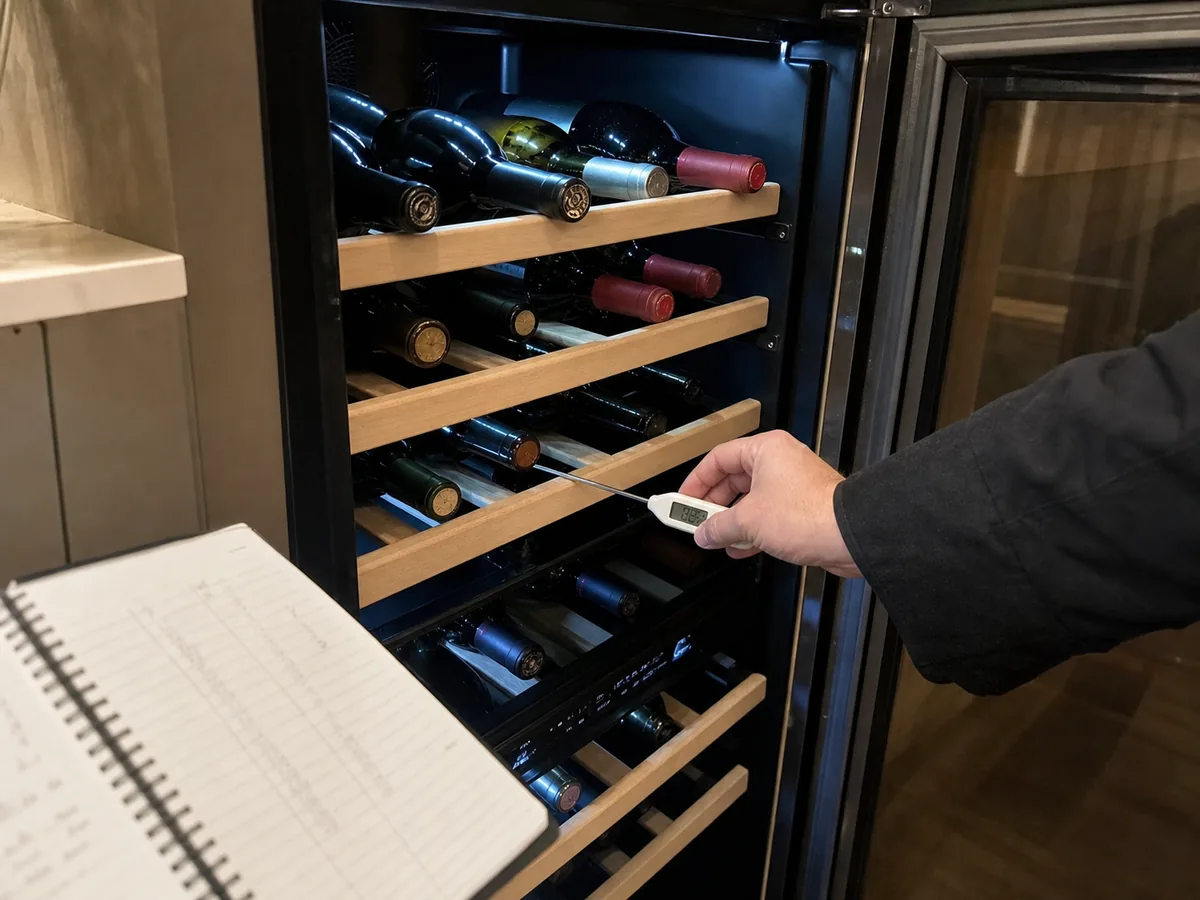
Context figure: built-in access and seal contact
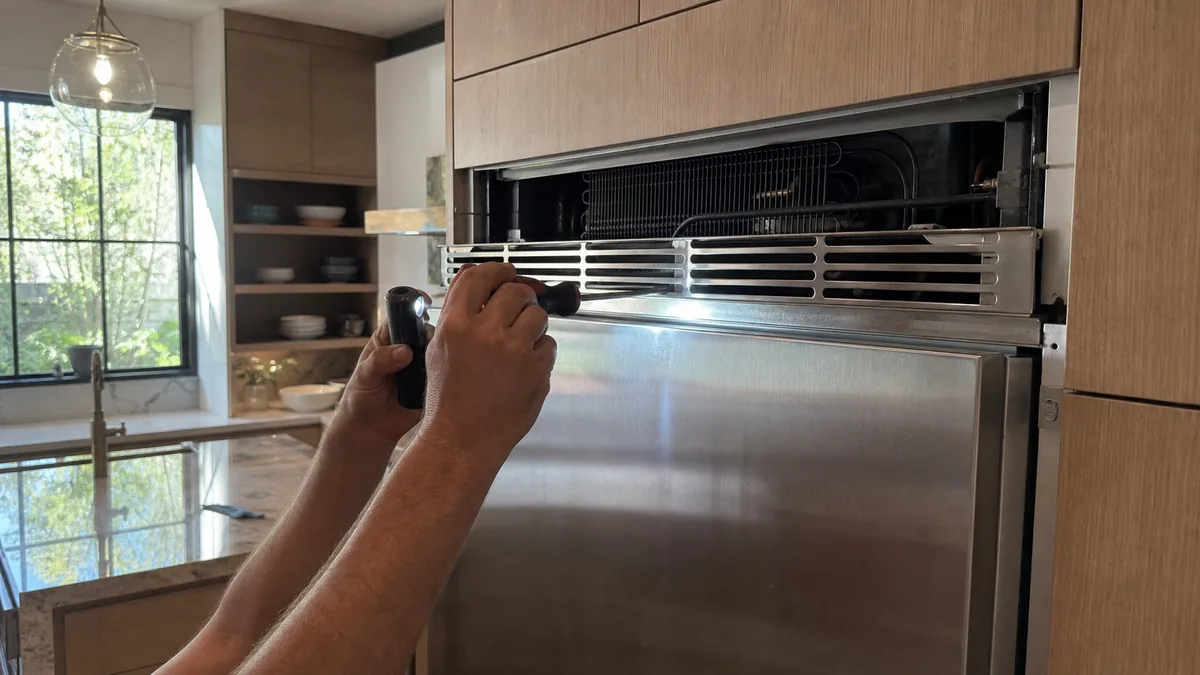
Rule out the look-alikes
When a "seal problem" is really electronics
A door that feels wrong is not always a gasket. Sub-Zeros use a control board, thermistor, or display alarm to manage cooling and warn you when something drifts. In plain language: the thermistor is a small temperature sensor, the control board is the brain that reads it and runs the fans and defrost, and the display alarm is the message you see when a reading falls out of range. A warm-feeling door or a wine column drifting several degrees can come from a frosted evaporator or a tired board just as easily as from a leaking seal — and the cabinet can fog up either way. That is why we measure before we replace. Diagnosis confirms a true seal fault when the dollar-bill test fails at a specific spot, the frost line follows the gasket, and zone temperatures otherwise track their set points. If the temperatures wander on their own with the seal intact, the answer is electronic, and we trace it on our not-cooling diagnostic instead.
What we will not guess: we do not diagnose a control board, thermistor, or display alarm from the symptom alone. Those are confirmed with instrument readings on site — never assumed from a sweaty door or a single beep.
What the symptom actually is
Condensation, frost line, warm-air leak and panel misalignment
Seal failure shows up four ways. Condensation is moisture forming on or around the door where cold meets warm, humid kitchen air. A frost line is a thin band of ice tracking the gasket lip — it marks the exact path of the leak. A warm-air leak is an edge of the door that feels noticeably warmer than the rest because conditioned air is escaping there. And panel-ready door misalignment is when the heavy wood front has pulled the door out of square so the gasket no longer meets the cabinet evenly.
Normal versus abnormal matters here. A faint, even film of moisture on the outer door during a humid stretch is usually normal and clears as the kitchen dries. A steady frost line, water pooling in one corner, a door that creeps back open, or a warm edge you can feel with your hand is abnormal and points to a real seal leak.
The quickest home check is the dollar-bill seal test: close the door on a bill so half sticks out, then pull. Good seal grips the bill; if it slides free, the gasket is not making contact at that spot. Repeat it at the top, middle and bottom of every edge to find where the leak lives.
When to stop relying on the bill test. The test finds where contact fails, not why. Once you have a frost line that returns after cleaning, a door that won't sit flush, or sag at a hinge corner, stop re-testing and book a diagnosis — repeatedly snapping a misaligned panel-ready door can chip the front and worsen the hinge.
Why seals fail here specifically
Foothill humidity around the Forbes Mill Museum area
Gaskets fail faster in Los Gatos than the spec sheet suggests, and the local climate is a real reason. Down by the creek near the Forbes Mill Museum and the older downtown blocks, summer days swing from warm, dry afternoons to cool, damp evenings rolling off the foothills. That daily moisture cycle is hard on rubber: the gasket warms and softens, then cools and contracts, and over years it takes a set — flattening at the contact points until it no longer springs back to seal. Add the heavy, kiln-dried wood panels common on Los Gatos panel-ready Sub-Zeros, and the door's own weight accelerates hinge sag. The practical service impact is that we see compressed-gasket and hinge-sag leaks here years sooner than in a flat, climate-stable kitchen, and we plan every visit to check both the rubber and the hinge, not just one. We carry that same approach on our same-day route through Saratoga, where hillside homes face the identical foothill humidity load.
Evidence, not adjectives
How we prove it is the seal — and not something pricier
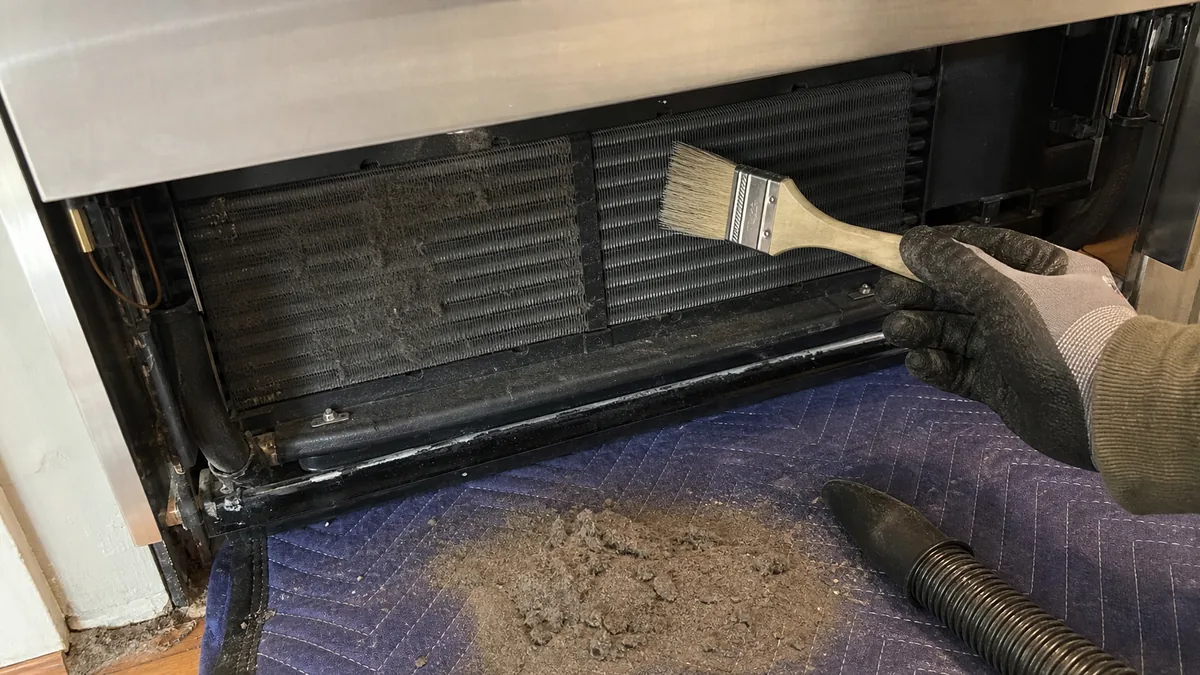
When a customer tells us the fresh-food section is warm while the freezer still holds, a leaking door gasket is one honest suspect — but only one. We earn the recommendation with evidence, not a sales pitch. On every seal call we log temperature readings in both zones against their set points, capture condenser and evaporator photos so you can see whether a coil is frosting, pull model-tag proof from the rating plate so the right OEM part is matched to your exact serial, and document the OEM fan, gasket, and control-board evidence behind whatever we propose. If the seal test fails and the frost line follows the gasket, the gasket gets quoted. If the temperatures wander with the seal intact, we say so and chase the real cause instead. You see the failed component and the plate match before you approve a dollar of work.
What we document on a seal call
The photos that justify the repair
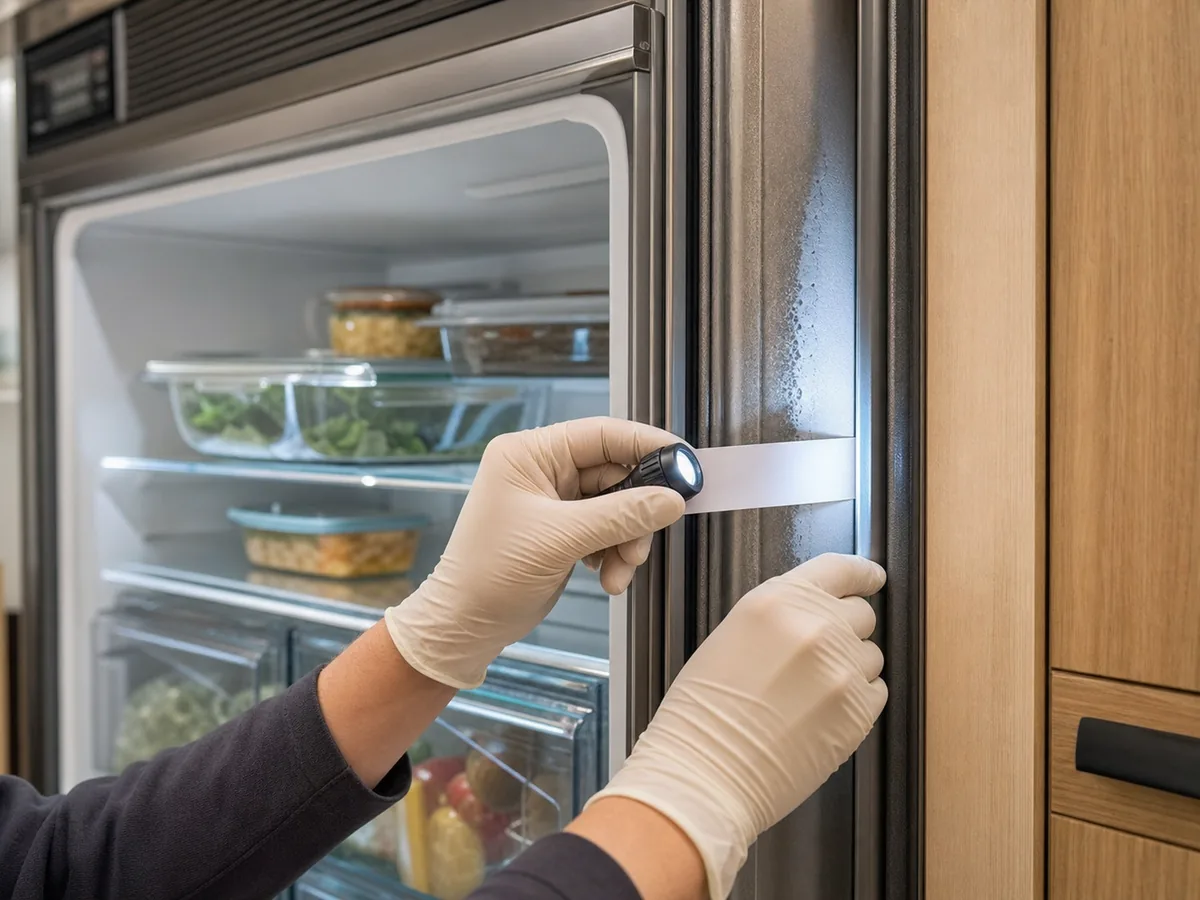
Found a frost line or a sweaty edge? Let's confirm the seal.
Run the dollar-bill test, note where it slides free, and tell us the model number off the rating plate. We arrive with the OEM gasket and hinge parts your unit actually takes — and we re-verify the seal before we leave.
Door gasket & seal questions
Seal questions we hear in Los Gatos
How do I know if my Sub-Zero door gasket needs replacing or just cleaning?
If a dollar bill slides out easily when closed in the door, or you see a frost line or condensation along one edge, the gasket has compressed or torn and needs replacing - typically $255-$525 in Los Gatos. If it only collects crumbs and still grips the bill, cleaning and a hinge check may be enough.
Why does my panel-ready Sub-Zero door sweat in a Los Gatos kitchen?
Sweating usually means warm room air is reaching the cold cabinet through a leaking gasket or a sagged hinge, often after a heavy panel-ready front pulls the door out of alignment. We map the frost pattern, replace the gasket if needed and reseat the door flush so the seal holds - most repairs run $255-$525.
Can I just buy and snap in a new Sub-Zero door gasket myself?
You can buy an OEM gasket, but the seal almost never fails on its own. On built-in Sub-Zeros a compressed gasket usually rides alongside a hinge that has sagged under a heavy panel-ready door or a cabinet that has shifted. Drop in a new gasket without correcting alignment and the same frost line returns within weeks. We confirm by closing the door on a dollar bill at several points before deciding whether the fix is the gasket, the hinge, or reseating the unit.
Why does my Sub-Zero door sweat or grow a frost line on the hinge side?
Condensation and a frost line mark exactly where warm, humid Los Gatos air is leaking past the seal. On panel-ready doors the heavy wood front tends to pull the hinge side down over time, so the gasket loses contact at the top hinge corner first. The frost or sweat pattern tells us which corner is leaking before any part comes off.
Is a little condensation on my Sub-Zero door normal in summer?
A light, even film on the outer door during a humid spell can be normal and clears when the kitchen dries out. What is not normal is a steady frost line on the gasket, water pooling in one corner, or a door that feels warm to the touch along an edge. Those point to a real seal leak, not ambient humidity, and are worth a diagnosis.
Does a failing door gasket make my Sub-Zero run constantly?
It can. A leaking gasket lets warm air in continuously, so the compressor runs longer and the unit works harder, especially through a foothill summer. We log run behavior and zone temperatures alongside the seal test so we can tell a true gasket leak from a separate cooling fault before recommending parts.
Not sure it's the seal? Start at the full Sub-Zero service overview, compare with the not-cooling diagnostic, put the twice-a-year seal check on the Los Gatos maintenance calendar, or Book Online.
How we diagnose it
How we diagnose a Sub-Zero seal problem in Los Gatos
- Run the paper-pull test. Close a dollar bill in the door at several points; an easy slip-out means a compressed gasket.
- Map the frost line. The condensation or frost pattern shows exactly where warm valley air is leaking in.
- Check hinge alignment. Heavy panel-ready fronts sag the hinge and pull the door out of square.
- Replace and reseat. Fit the OEM gasket and reseat the door flush so it closes true.
- Re-test the seal. Confirm the seal-drag and that condensation is gone before leaving; most repairs are $255-$525.
Cost of a gasket & seal repair
Sub-Zero door gasket & seal repair cost in Los Gatos
Typical Los Gatos ranges for gasket and seal work, confirmed in writing after diagnosis. The diagnostic is credited to any repair you approve.
| Service / symptom | What’s included | Price range | Typical time |
|---|---|---|---|
| Diagnostic visit (credited) | Seal-drag / paper-pull test, frost mapping | $135-$210 | 45-90 min |
| Door gasket replacement | OEM gasket, seal-drag re-test | $255-$525 | 1-2 hrs |
| Hinge alignment / panel-ready reseat | Hinge cam adjusted, door reseated flush | $255-$525 | 1-2 hrs |
| Gasket + hinge combined service | Gasket, alignment, condensation cleared | $255-$525 | 1-3 hrs |
Fast fact: A typical Sub-Zero door gasket repair in Los Gatos runs $255-$525. Condensation or a frost line at the door usually means a compressed gasket or hinge sag letting warm valley air in — not a cooling fault in the sealed system.
Customer reviews
What Los Gatos homeowners value after a Sub-Zero visit
Backed by our wider appliance repair network with 700+ customer reviews across platforms and a 4.9 average rating.
Recent Sub-Zero work across Los Gatos and the West Valley.
Condensation and a frost line around our BI-42SD door in a Blossom Hill Manor remodel. The tech ran the paper-pull test, found a compressed gasket and slight hinge sag, replaced the OEM gasket and aligned the panel-ready front. $345, two hours, sweating gone.
Our Glen Una panel-ready column wasn’t sealing flush — warm valley air leaking in. They mapped the frost pattern, swapped the gasket and reseated the door true. $510, and the seal-drag test passed before they left.
Sweaty door and a mildew smell on our 632 in Almond Grove (95030). They found a torn gasket corner, replaced it and adjusted the hinge cam. About 90 minutes, $275, no more condensation.