
Los Gatos · Sub-Zero ice maker & water line
Sub-Zero not making ice, slow, jammed, or making hollow cubes? Trace the water first
A Belgatos homeowner called because the ice maker in their built-in Sub-Zero had gone from full bins to a few hollow, half-formed cubes a day. In Los Gatos, ice that is slow, jammed, or producing hollow cubes is almost always a water-volume problem, not a dead unit — a household shutoff left half-closed, a weak inlet valve, a fill tube starting to ice over, or a filter no one has changed in years. We trace the water path from the wall to the mold and measure actual fill before anyone talks about replacing the ice maker module.
How do you fix a Sub-Zero ice maker making hollow cubes in Los Gatos?
For a Monte Sereno home in Los Gatos 95030, Los Gatos Sub-Zero Repair traces the water path before touching the module: hollow or slow cubes usually mean a half-closed shutoff, a weak inlet valve or a fill tube starting to freeze, so we measure fill on a meter first. Need cubes back? Dial (408) 402-4604.
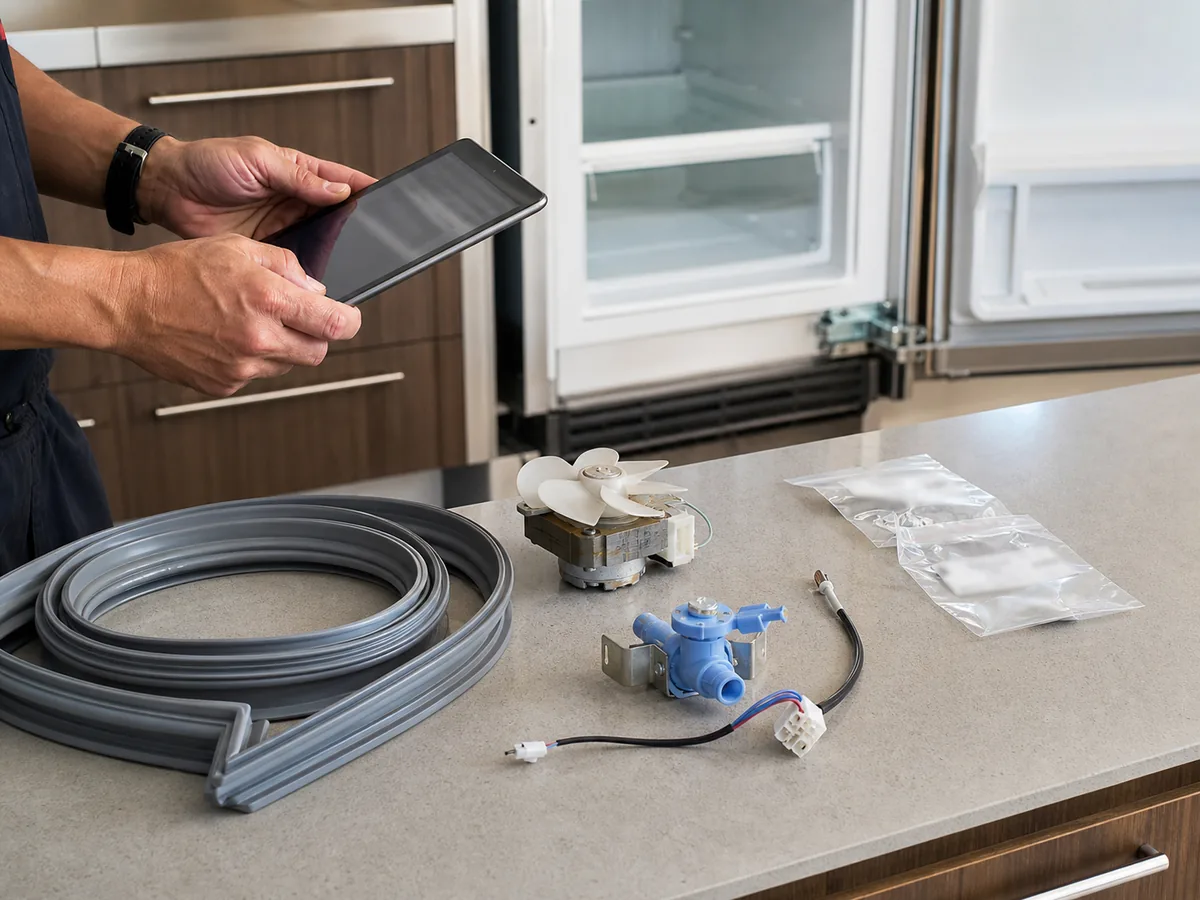
Why is my Sub-Zero ice maker not making ice in Los Gatos?
In Los Gatos, no-ice or hollow-cube calls almost always trace to the water path, not the module. The usual causes, cheapest first:
- A household shutoff valve left half-closed or a kinked supply line under the cabinetry.
- A spent or scaled water filter starving the fill.
- A freezer running warmer than 5°F, so the mold never freezes a clean cube.
- A weak or grit-clogged fill valve that delivers too little water.
- A frozen fill tube or a failed ice-maker module — the last suspect, not the first.
- Low water pressure on the hillside 95033 lines toward the Santa Cruz Mountains foothills.
Cross-check with our Sub-Zero not-cooling diagnostic or use our booking and call-prep guide to schedule. No ice and a warm freezer? That changes the diagnosis entirely — start with our Sub-Zero freezer not freezing page, because an ice maker cannot freeze a clean cube in a freezer that has lost temperature.
Hard and well water in the foothills. Water chemistry is a real factor here. The moderately hard San Jose Water supply in town leaves scale that narrows fill tubes and stiffens inlet valves over the years, and homes on private wells up in the 95033 hills above Old Town run harder still — mineral deposits there can clog a fill screen or stick a valve partly open, starving the harvest. Where scale is the cause we flush and descale the water path before replacing any part, then re-measure fill to confirm full cubes return.
Why ice and refrigeration can look related
When slow ice and a drifting wine column share a cause
Most ice problems are pure plumbing — the water that should reach the mold simply isn't getting there in full. But the ice maker still lives inside a cold compartment, so a refrigeration fault can mimic a water fault. If a wine column is drifting several degrees off its set point during the same weeks the ice slows down, that is a clue we are dealing with a shared cold-side problem — condenser airflow, an evaporator fan, or a sensor reading wrong — rather than a clogged line. In plain language: when the whole cold side is running warm, the mold can't freeze a clean cube even if the water is fine.
What confirms which it is: we log the actual compartment temperatures against set points and watch a full fill-and-harvest cycle. If fill volume is short but temperatures are in spec, it is a water-path repair. If temperatures are drifting, we follow the refrigeration trail on our not-cooling diagnostic instead of selling you an ice maker you don't need.
What we won't guess: we can't tell from a phone call whether a slow batch is a half-closed shutoff or a failing module. Both produce the same hollow cubes. The cause is confirmed on site by measuring fill and cycling the unit — never assumed from the symptom alone.
Normal vs abnormal
What hollow cubes, slow batches, jams and no ice actually mean
A healthy Sub-Zero ice maker fills the mold, freezes it solid, warms the mold briefly to release, and sweeps the cubes into the bin — then refills. Knowing the normal cycle is how you tell a real fault from a unit that is simply between batches.
Hollow or half-formed cubes mean the mold froze before it finished filling — a water-volume shortfall. Slow batches (a thin layer in the bin after a full day) point to restricted water or a saturated filter. Jams happen when cubes don't release cleanly and the sweep stalls against them, often after a partial fill leaves odd-shaped pieces. No ice at all is usually a closed shutoff, a dead inlet valve, a fully frozen fill tube, or a control that has shut the ice maker off after a fault. None of those is automatically the module.
Stop forcing harvest if it's jamming. Repeatedly triggering a harvest cycle while the fill tube is already freezing can pack an ice plug that splits the fill tube — turning a five-minute thaw into a parts repair and a possible water leak inside the cabinet. If the unit is grinding or cubes are stuck in the mold, switch the ice maker off and leave it. Let us thaw and inspect before more damage is done.
Simple to expensive, in water-path order
Ranked likely causes — and how we test each one
We work this table top to bottom because that is the order water travels and the order from cheapest to most expensive to fix. Most Los Gatos calls are resolved in the first three rows.
| Likely cause | Signs | Test | Typical repair |
|---|---|---|---|
| Household shutoff half-closed | Sudden drop to hollow/slow cubes after plumbing work or a bumped valve behind the unit. | Open the saddle/quarter-turn valve fully and measure refill volume into a cup over one cycle. | Often no part — restore full flow and re-test. We confirm pressure is in range. |
| Inlet valve weak or partly clogged | Short fill even with the shutoff fully open; cubes consistently small or hollow. | Check valve voltage on call, then measure flow through the valve; inspect the screen for grit. | OEM inlet valve matched to your model; clear the line screen. |
| Fill tube freezing | No ice or a hard jam; visible frost or an ice plug at the tube; grinding on harvest. | Thaw and inspect the tube; verify the mold heater warms enough to clear the tube each cycle. | Thaw and clear; replace a split tube; correct the cause (low heat or short fill). |
| Water filter clogged | Gradual slowdown over months; filter overdue; off taste alongside slow ice. | Note filter age, bypass-test flow with a fresh or bypassed filter. | Genuine replacement filter; re-test fill after change. |
| Module or mold heater | Good water volume but cubes still won't release, or the cycle never advances. | Verify fill is correct first, then test module timing, motor and mold-heater resistance. | OEM ice maker module or mold heater, serial-matched — the last resort, not the first. |
We never start at the bottom row. Replacing a module on a unit that just had a half-closed valve is the most common avoidable Sub-Zero ice repair we see.
Why the neighborhood changes the repair
Local water and home-age factors we plan for
These are real service factors — water pressure, home age, line routing and cabinetry — not a keyword list.
- La Rinconada / Rinconada HillsHillside homes here can see variable water pressure, and older line routing through long under-cabinet runs means a marginal inlet valve shows up as hollow cubes sooner than it would on a short, high-pressure run.
- Blossom Hill ManorEstablished kitchens where the Sub-Zero sits in deep millwork; the saddle valve and filter are often behind cabinetry, so we plan access to reach the shutoff and fill line without disturbing the panel-ready front.
- BelgatosRemodeled kitchens where new plumbing was tied in during the remodel — a shutoff left half-open after the job is one of the most common causes of a sudden drop to slow ice.
We route the same day through Saratoga, Monte Sereno, Campbell and Cambrian Park in San Jose. Book Online→
Evidence, not adjectives
When it isn't the water: control board, thermistor or display alarm
If the water path checks out clean and the ice is still wrong, we look at the cold side. We name the evidence we collect on every call: temperature readings logged against set points, condenser and evaporator photos showing airflow or frost, and model-tag proof so the right part is ordered. When a control board, thermistor or display alarm is involved, the alarm narrows it but does not diagnose it — the same code can be a sensor reading out of range or a board that lost the ice-maker circuit. We confirm with instruments and OEM fan, gasket and control-board evidence before recommending anything, and we show you the failed part against the rating plate before you approve the quote.
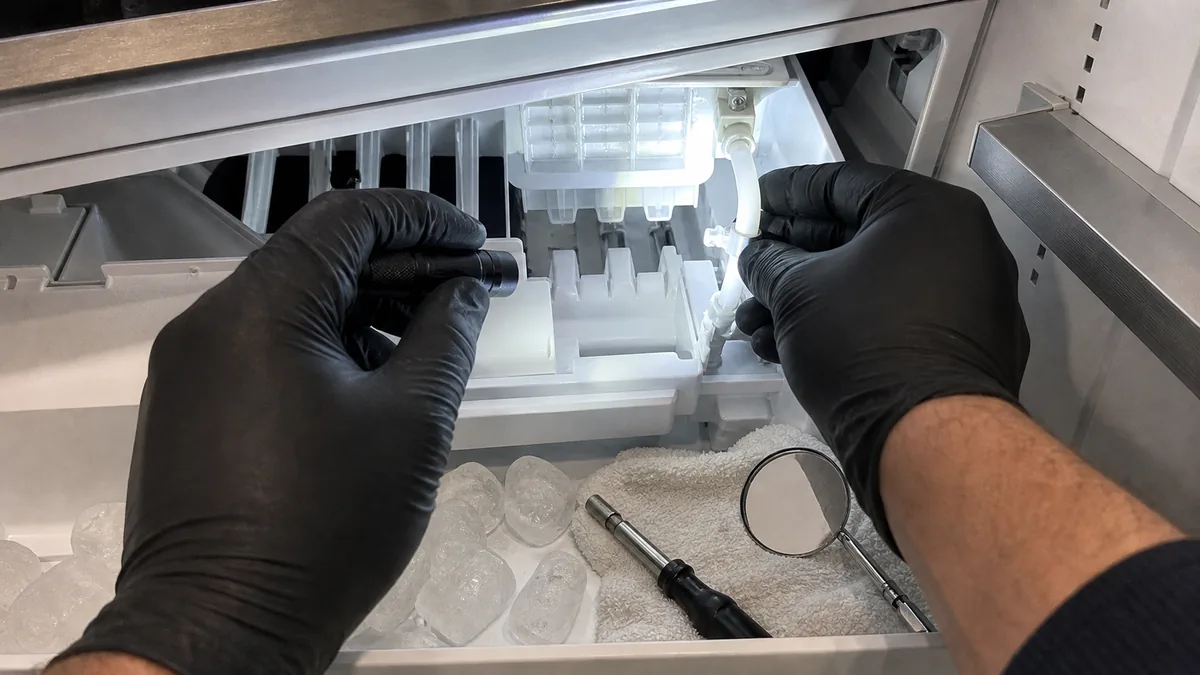
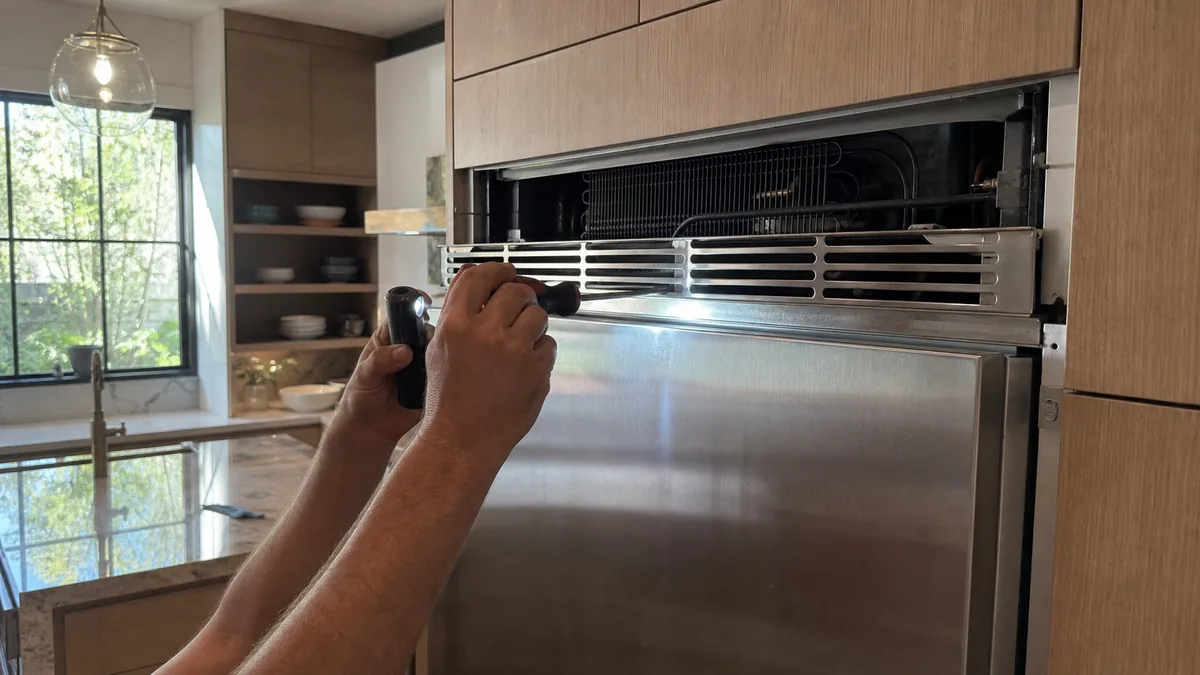
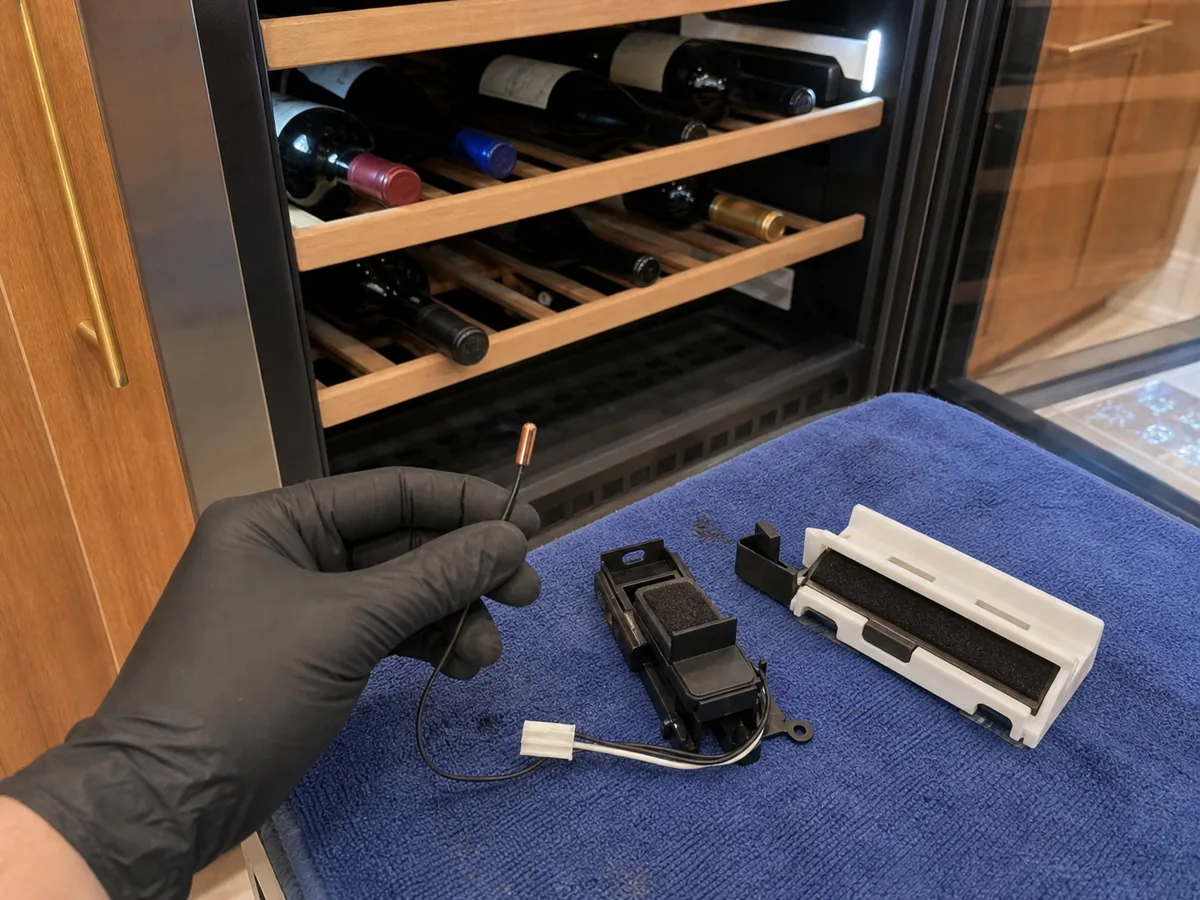
Tell us the model — we'll check parts before we roll
Read the model and serial off the rating plate, describe whether the ice is slow, jammed, hollow or absent, and we confirm inlet-valve and module availability before the visit so a one-trip fix is realistic.
Real answers
Ice and water questions we hear in Los Gatos
Why does my Sub-Zero make hollow or slow ice in Los Gatos?
Almost always water volume, not the ice maker module. A half-open household shutoff, a weak inlet valve, or a fill tube starting to freeze starves the harvest, and the moderately hard San Jose Water supply can scale the valve. We measure fill on a meter first; the typical fix is $215-$430.
Should I replace the whole Sub-Zero ice maker or just a part?
Usually just a part. We test the water line, inlet valve and fill tube before assuming the module failed, because a starved water supply mimics a dead ice maker. Valve or line work runs $215-$430; only a confirmed module fault is $295-$580. We show the evidence before quoting the module.
Why are my Sub-Zero ice cubes hollow or only half-formed?
Hollow or half-formed cubes mean the mold is freezing before it finishes filling, which is almost always a water-volume problem rather than a failed ice maker. The usual culprits, in order, are a household shutoff that is only half open, a weak or partially clogged inlet valve, or a fill tube starting to ice over. We measure actual fill volume and water pressure on site before assuming the module or mold heater is at fault.
My ice maker is slow or making no ice at all — where do you start?
We follow the water path from the wall to the mold: household shutoff, inlet valve, fill tube, water filter, then the module and mold heater. A slow batch usually points to restricted water; no ice at all can be a closed valve, a frozen fill tube, or a saturated filter that has not been changed in years. We confirm the exact stage by measuring fill and cycling a harvest, not by guessing.
Should I keep forcing the ice maker to cycle if it's jammed?
No. Repeatedly forcing a harvest when the fill tube is already freezing can build an ice plug that splits the tube, turning a simple thaw into a parts repair and a possible leak inside the cabinet. If cubes are jamming in the mold or the unit is grinding, stop the ice maker, leave it off, and let us thaw and inspect the tube and module before more damage is done.
Could the same problem cooling my ice maker also be drifting my wine column?
Sometimes the same cold-side diagnostics overlap. If a wine column is drifting several degrees at the same time the ice slows, that points us toward shared cold-side causes such as condenser airflow, an evaporator fan, or a control or thermistor reading wrong, rather than a water-line problem alone. We log both temperatures and check for a display alarm so we can tell a water issue apart from a refrigeration issue before quoting. See our wine storage temperature page if the column is involved.
How we trace it
How we trace a Sub-Zero ice problem in Los Gatos
- Rule out cooling. Confirm the freezer holds 0 °F so a cooling fault is not masquerading as an ice problem.
- Check the household shutoff. A half-open valve under the sink is the most common starve, especially after a remodel.
- Measure fill volume. Cycle a harvest and measure water on a meter — hard valley water often scales the inlet valve.
- Inspect the fill tube. Look for a tube starting to freeze shut, a frequent cause of hollow cubes.
- Replace only what failed. Valve or line work runs $215-$430; only a proven module fault is $295-$580.
Cost of an ice maker repair
Sub-Zero ice maker & water-line repair cost in Los Gatos
Typical Los Gatos ranges for ice and water-line work, confirmed in writing after diagnosis. The diagnostic is credited to any repair you approve.
| Service / symptom | What’s included | Price range | Typical time |
|---|---|---|---|
| Diagnostic visit (credited) | Fill-volume test, valve / line / module check | $135-$210 | 45-90 min |
| Inlet valve / fill tube | OEM valve or fill tube, line flushed | $215-$430 | 1-2 hrs |
| Water line / filter housing | Line replaced, filter housing, leak check | $215-$430 | 1-2 hrs |
| Ice maker module | OEM module, harvest cycle verified | $295-$580 | 1-3 hrs |
Fast fact: Hollow or slow Sub-Zero cubes in Los Gatos are usually water volume, not the module — typical fix $215-$430. The moderately hard San Jose Water supply scales inlet valves and fill tubes faster, so we measure fill on a meter before replacing any part.
Customer reviews
What Los Gatos homeowners value after a Sub-Zero visit
Backed by our wider appliance repair network with 700+ customer reviews across platforms and a 4.9 average rating.
Recent Sub-Zero work across Los Gatos and the West Valley.
Our IC-27 ice maker made hollow, slow cubes for weeks. The tech in Monte Sereno (95030) measured fill volume, found a half-frozen fill tube and weak inlet valve — not the module — and replaced both. Full cubes again same day for $310.
Under-counter UC-15I in our Belgatos kitchen quit making ice. They traced it to a kinked water line and scaled filter housing off the hard valley water, flushed and replaced the line. About 90 minutes, $245.
Sub-Zero 648PRO ice maker jammed in our Glen Una estate kitchen. They confirmed water volume on a meter before touching the module, then fitted the OEM ice maker module. One visit, $540.