What real Sub-Zero repairs in Los Gatos actually look like
A real Sub-Zero call near the Los Gatos Creek Trail rarely matches the panic that prompts it. The most common ones are a fresh-food section warm while the freezer still holds, or a wine column drifting several degrees off its set point over a few weeks. Neither means the unit is dead. On a dual-refrigeration built-in, one sealed system can wander while the other stays in spec. Below are case studies that show how we read temperatures, find the failed part, and verify the fix before we leave.
Each case below shows the kind of Sub-Zero failure we diagnose in Los Gatos and the evidence we document on the call — temperatures, model-tag proof, and the part matched to your serial. The compact, privacy-safe versions are collected in the case-notes evidence library.
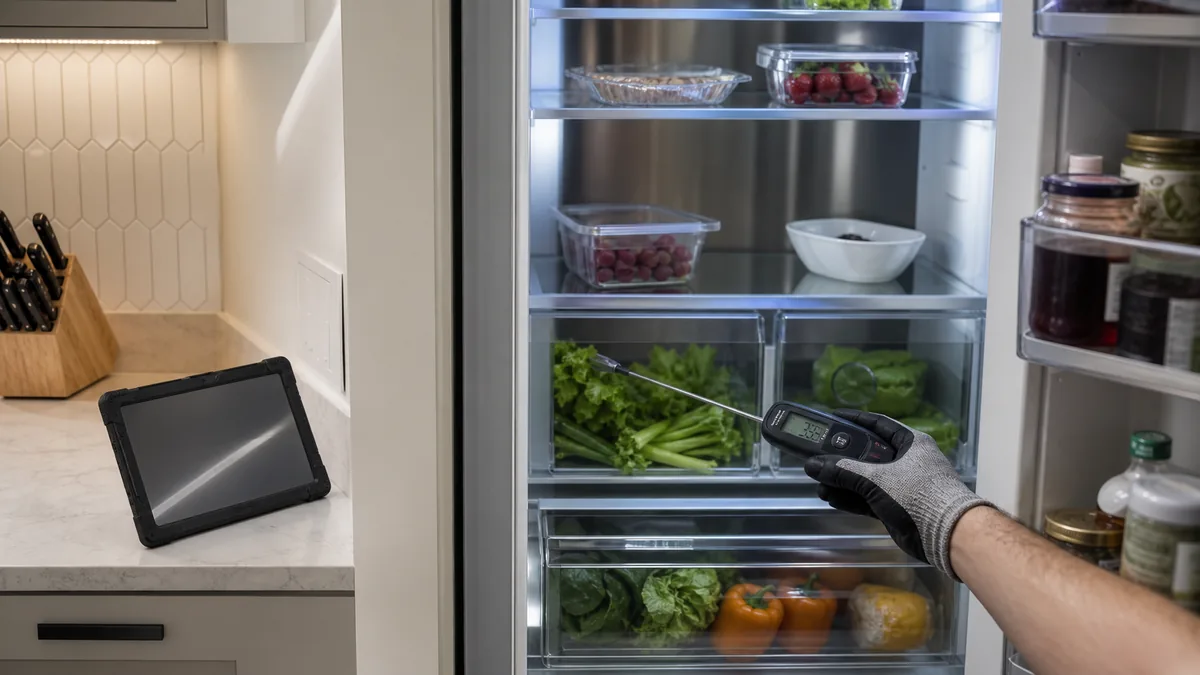
The reading that starts it. One zone in spec, one drifting — the split that rules out a single shared fault.
Before the cases — what the words mean
Control board, thermistor or display alarm — in plain language
Most Sub-Zero faults that throw an alarm come down to three parts, and it helps to know them before you read the cases. A thermistor is a small temperature sensor; if it reads wrong, the unit cools too much or too little even though nothing mechanical is broken. The control board is the brain that reads those sensors and decides when fans, defrost and compressors run; a failing board can mimic almost any symptom. The display alarm is just the messenger — a beep or a code telling you something is out of range, not what part caused it. Diagnosis is what separates them: we log actual zone temperatures against the set points, then check whether the sensor reading, the board's response, or a mechanical part is the real cause. A code points us at a zone; instruments confirm the part.
One note: we won't guess a specific Sub-Zero error number from a photo. Codes vary by model and series, so we verify the alarm against the model and serial on site.
That is why the primary "book" button below sits after the explanation and the proof, not after a sales claim — so you decide once you understand what a Sub-Zero-specific diagnosis is actually buying you.
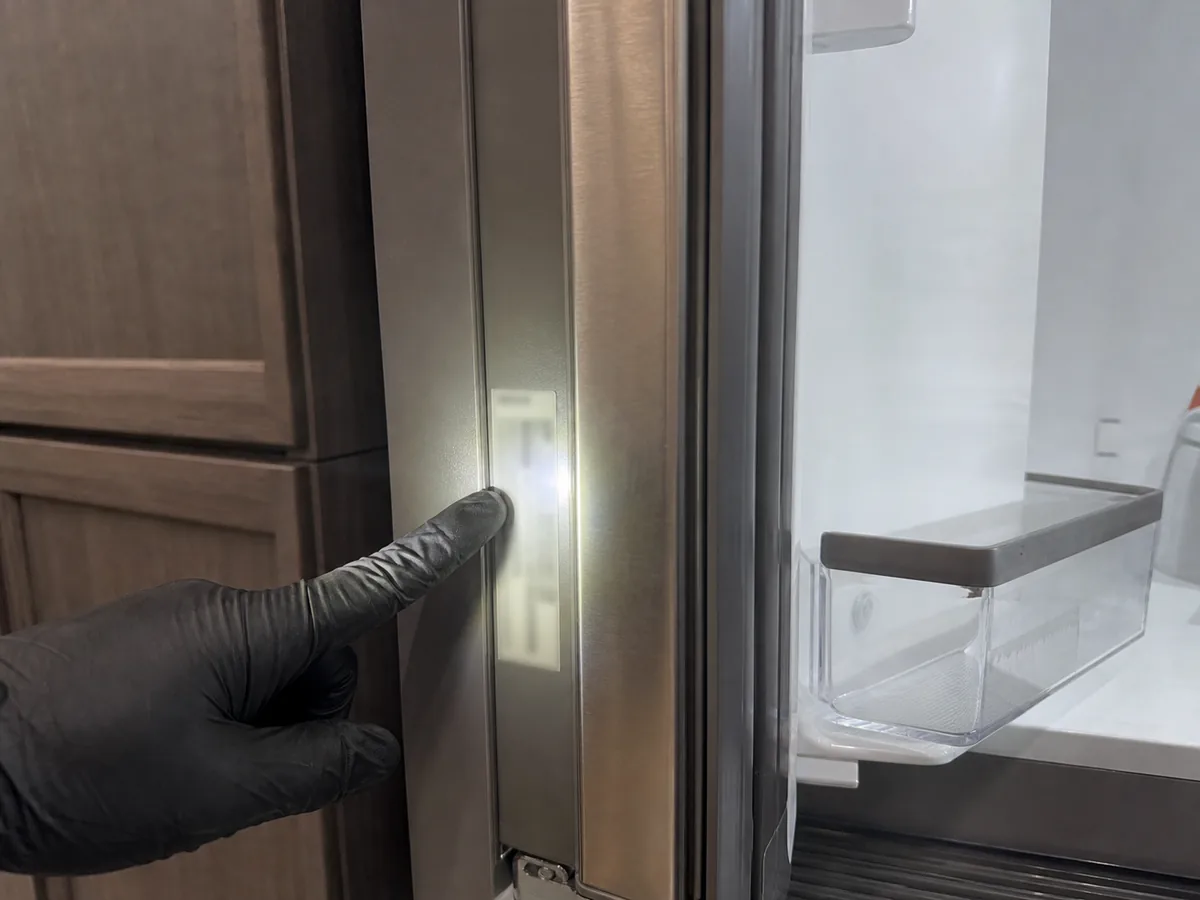
Temperature evidence. The drift, logged against set point, before any part is named.Model-tag proof. The serial dates the unit and matches the correct OEM fan, gasket or board.Sealed-system map. Where EPA Section 608-regulated handling is required, not a "top-off and hope."
Fresh-food section warm while the freezer still holds
Problem
A built-in column in a kitchen a short walk from the Los Gatos Creek Trail: milk spoiling on the fresh-food side while the freezer stayed rock-solid. The owner had been opening the door repeatedly to check, which only added humidity.
Diagnosis
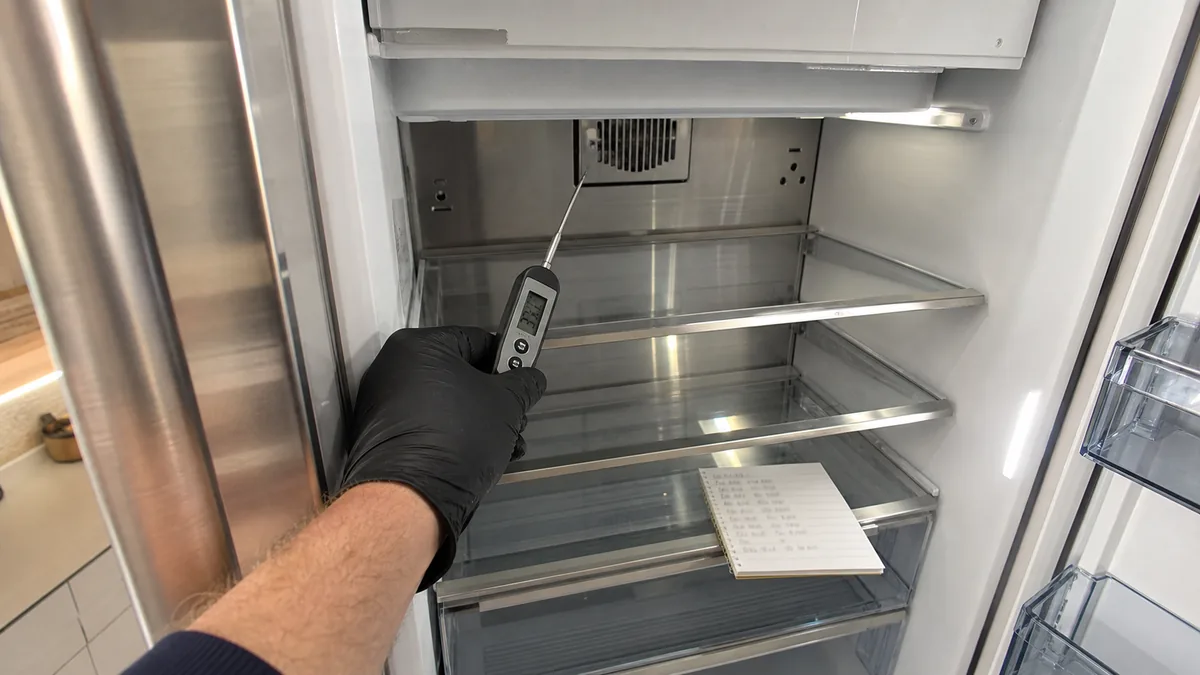
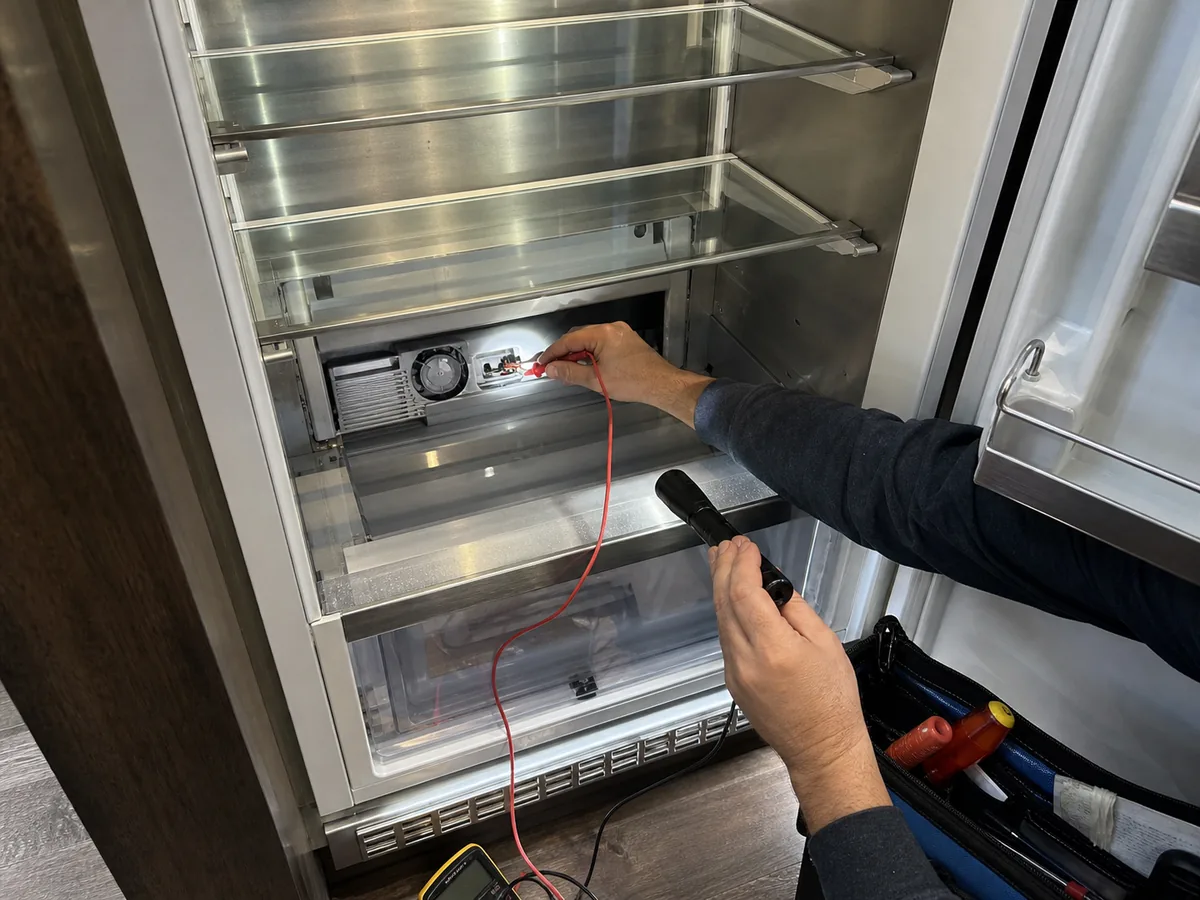
Probe readings showed the fresh-food zone in the low 50s°F against a 38°F set point, freezer in spec at 0°F. Behind the rear panel, the evaporator fan had stalled and the coil was lightly frosted — a classic dual-refrigeration split, not a compressor failure.
Repair
OEM evaporator fan motor, serial-matched to the rating plate. Defrost cycle confirmed and the air damper exercised so it stopped sticking.
Verification
Fresh-food zone logged back to 38°F by probe before leaving; freezer re-checked to confirm it never left spec.
Parts
One genuine OEM fresh-food evaporator fan; no sealed-system work needed.
Timeline
Single visit once the correct fan was confirmed by serial and carried on the truck.
What the homeowner learned
Repeatedly opening the door to "help" a warm fridge adds frost and hides the real fault. One warm zone with a cold freezer is a fan or defrost story far more often than a dead unit.
Warm-zone case. Panel-off documentation for a fresh-food section that is warm while the freezer still holds.
Expensive / complex · estate kitchen toward Vasona Lake County Park
Sealed-system loss on an older built-in, under EPA recovery
Problem
An 18-year-old built-in in an estate kitchen on the Vasona Lake County Park side of town: both zones slowly warming over weeks, the compressor running long without ever catching up.
Diagnosis
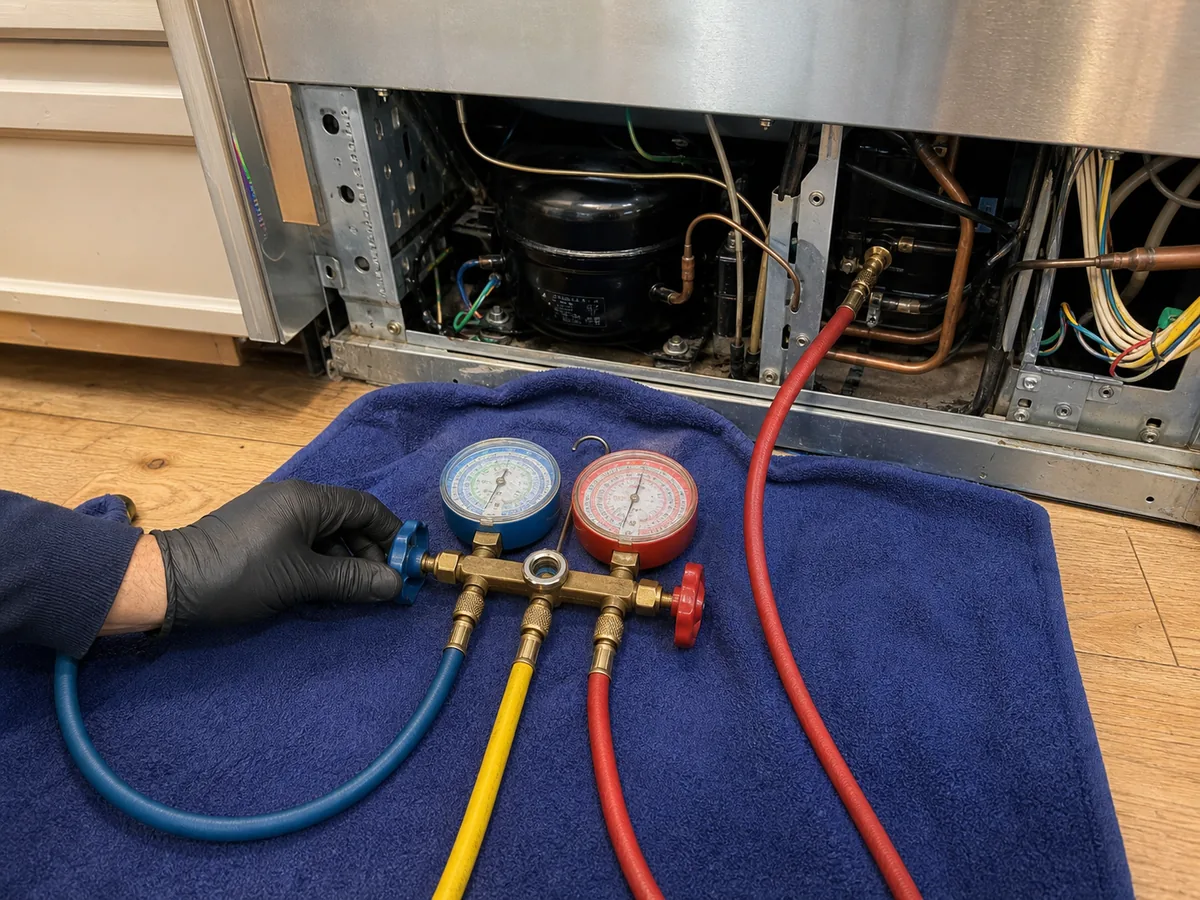
Temperature logging plus sealed-system instruments confirmed a slow refrigerant loss — not a fan, not a board. Because refrigerant was involved, the path required EPA Section 608-regulated handling rather than a "top-off and hope."
Repair
Sealed-system repair with proper recovery, evacuation and recharge to the model's specification, after the homeowner approved the quote against the replacement math.
Verification
Both zones pulled down and held at set point across an extended observation period before sign-off; condenser airflow and fan confirmed clear so the new charge wasn't masking an airflow problem.
Parts
Sealed-system components and OEM refrigerant charge; the existing compressor was retained where instruments showed it sound.
Timeline
The costly exception — multi-stage work spread across the recovery, repair and a re-verification check rather than one quick visit.
What the homeowner learned
A replacement built-in column runs $9,500-$16,500-plus once cabinetry is refitted, so even a sealed-system repair often extends a well-built unit several more years. The decision was made on measured evidence and written numbers, not a guess.
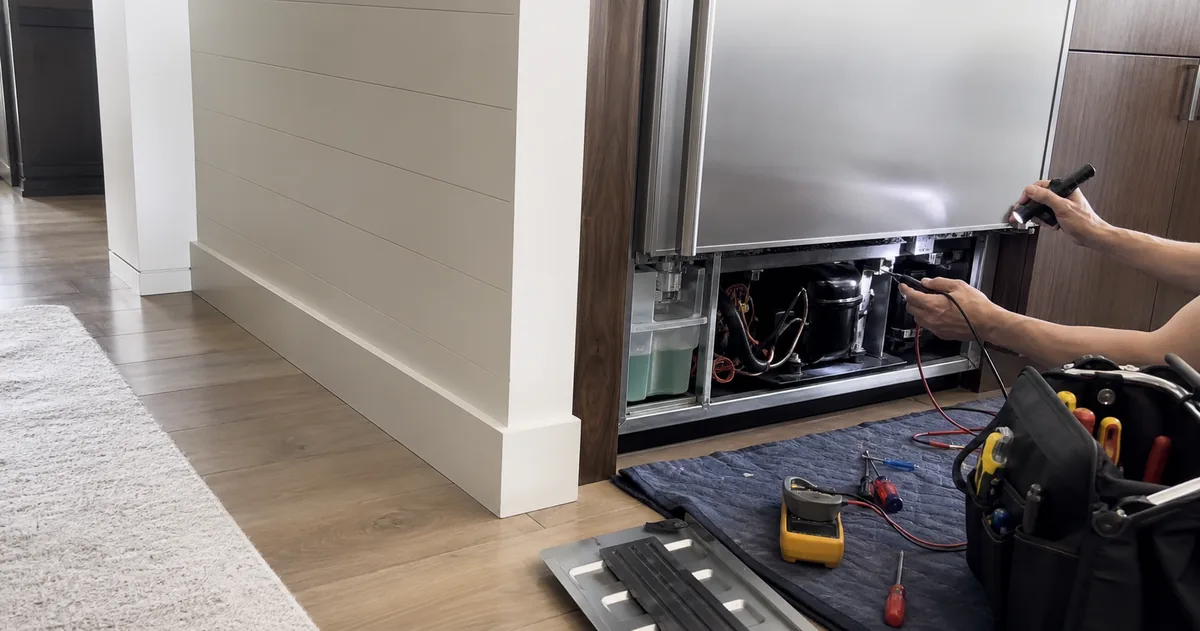
Sealed-system case. Access view for instrument-confirmed refrigerant or compressor work, with the cabinet area protected.
Maintenance / prevention · downtown near Forbes Mill Museum
Condenser dust and a tired door gasket, caught before failure
Problem
A downtown remodel a block from the Forbes Mill Museum: the Sub-Zero ran louder and longer than the owner remembered, with light condensation appearing on the door — not yet warm, but trending wrong.
Diagnosis
The condenser behind the top grille was packed with dust and pet hair, forcing the unit to run hot and long. The door gasket had compressed enough to let warm valley air seep in, the source of the sweat line. No control-board or thermistor fault — this was an airflow-and-seal maintenance story.
Repair
Full condenser clean-down, OEM door gasket replacement, and the panel-ready front reseated true so the door closed flush.
Verification
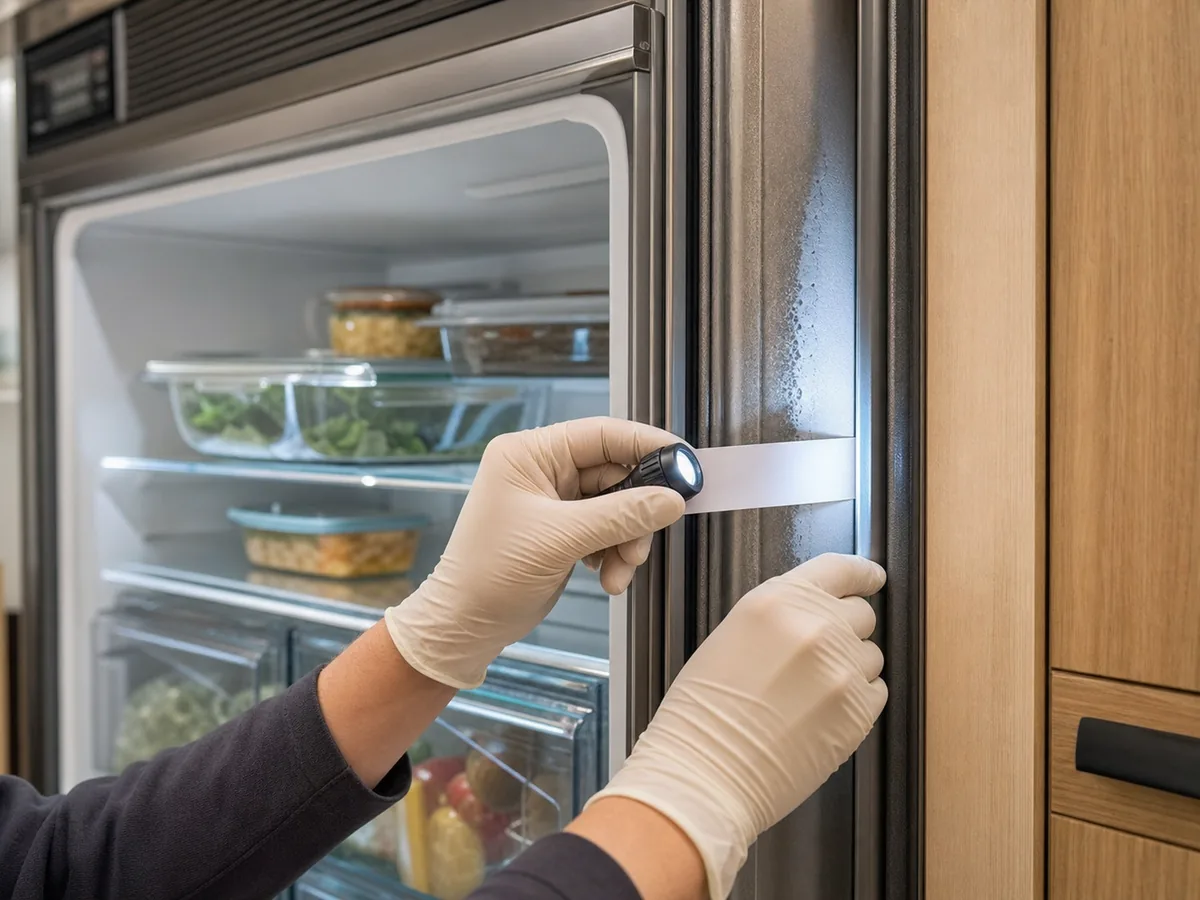
Run-time and zone temperatures re-checked after the clean; the gasket seal verified with a paper-pull test around the perimeter so no daylight remained.
Parts
One genuine OEM door gasket; condenser cleaning is service, not a part.
Timeline
Single preventive visit — far cheaper than the fan or sealed-system repair a neglected condenser eventually causes.
What the homeowner learned
In our dry foothill summers, a dust-choked condenser is the cheapest fault to ignore and the most expensive to let run. A scheduled clean and a sound gasket prevent the warm-fridge call entirely.
Seal verification. Paper-pull and frost-line check after a condenser clean or gasket service.
How a case becomes a real case study
Why "fresh-food section warm while the freezer still holds" needs evidence, not a slogan
The single most common Sub-Zero symptom we hear is a fresh-food section warm while the freezer still holds — and it is exactly the symptom that gets mis-quoted as a compressor when it is usually a fan, a frosted coil, or a control. So we anchor every case to evidence anyone can check. That means temperature readings logged for each zone against its set point; condenser and evaporator photos showing the actual state of airflow and frost; model-tag proof from the serial plate so the part we fit is the one your unit takes; and OEM fan, gasket and control-board evidence — the failed component shown in front of the meter before anything is approved. The same standard applies whether the alarm was a wine column drifting several degrees or a display alarm pointing at a thermistor. A code or a beep narrows the zone; instruments and OEM parts confirm the part. When a real job clears that bar and the homeowner agrees, its photo-documented set can be added above as jobs complete.
The evidence behind every Los Gatos Sub-Zero Repair case
Temperature readings
Each zone logged against set point — the drift is measured, never assumed.
Condenser & evaporator photos
Airflow, dust and frost documented before and after.
Model-tag proof
Serial plate matches the OEM part to your exact unit.
OEM part evidence
The failed fan, gasket or control board shown in front of the meter.
Have a symptom that matches one of these?
Read your model and serial off the upper-left interior wall or behind the toe-grille, tell us which zone is drifting, and we arrive with the parts your Sub-Zero actually takes. Start with the full service overview or jump straight to sealed-system detail.
What Los Gatos homeowners value after a Sub-Zero visit
Backed by our wider appliance repair network with 700+ customer reviews across platforms and a 4.9 average rating.
Recent Sub-Zero work across Los Gatos and the West Valley.
★★★★★
What stood out was the documentation. On our older built-in column in Glen Una the tech logged both zone temperatures, photographed the coil and pressure readings, and only then proved the sealed-system leak. Every step was written up before any refrigerant work.
Ellen S., Glen Una · documented sealed-system
★★★★★
They matched the part to our serial instead of guessing. Our 648PRO had a stalled fresh-food fan in La Rinconada; the model tag photo, the failed fan beside the meter, and the verified 38 °F readout were all in the write-up. No second trip.
Brian F., La Rinconada · serial-matched evaporator fan
★★★★★
Honest about the math on our 1990s BI-42SD in Almond Grove. They showed which parts were still available, replaced the gasket and condenser fan, and laid out repair versus a built-in replacement plainly. The notes they left made the decision easy.